
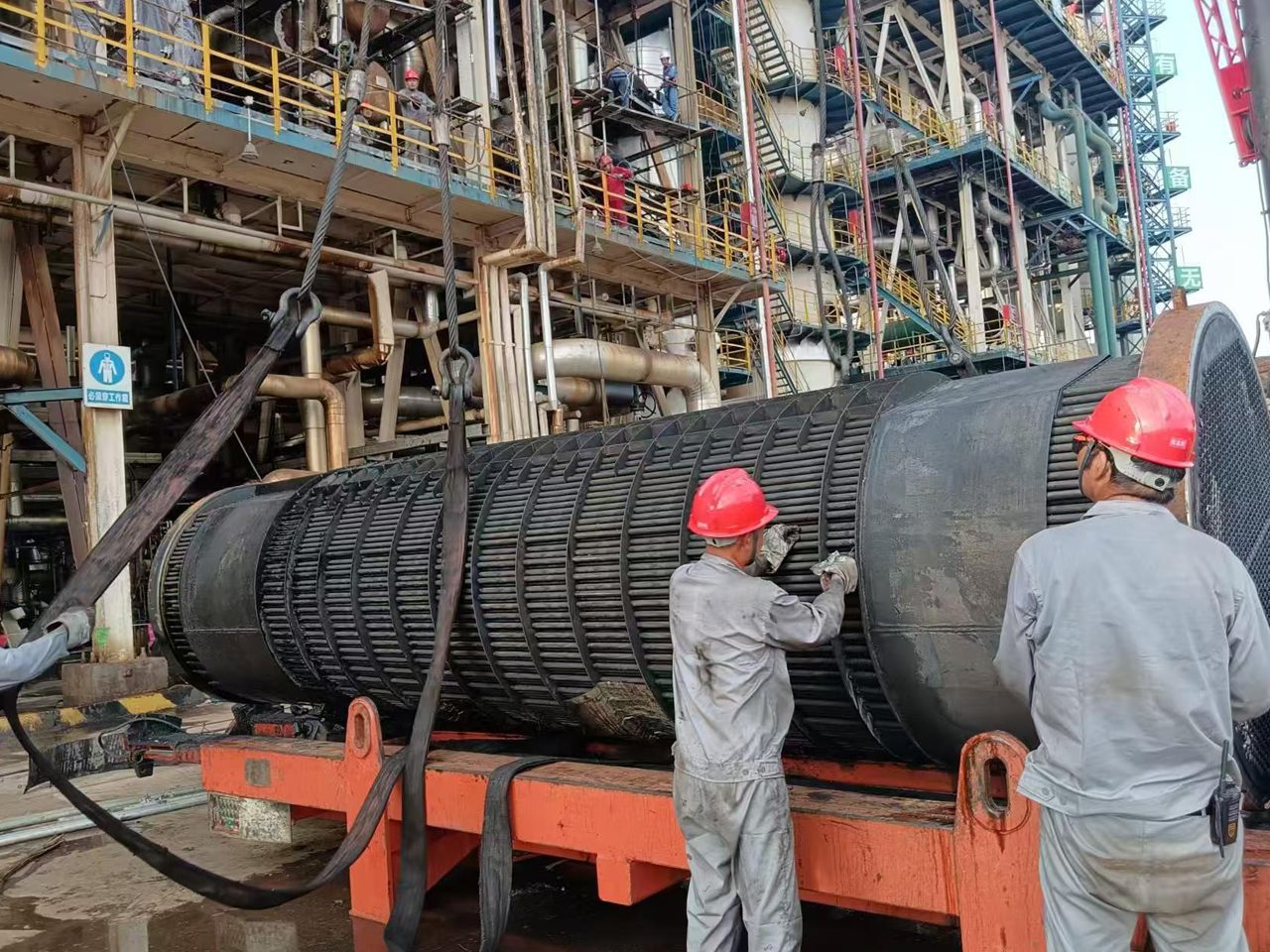
A tube bundle extractor, also called a bundle puller, is widely used in refinery, petrochemical and power plant maintenance to remove and reinstall shell-and-tube heat exchanger bundles. Compared with manual pulling or crane-only extraction, a dedicated extractor provides controlled pulling force, stable bundle support and safer horizontal movement during shutdown work.
However, tube bundle extraction is still a demanding job. Heavy bundles, limited working space, corrosion, fouling, lifting operations and tight turnaround schedules can all increase the risk of equipment damage or personal injury. Safe extraction depends not only on the machine itself, but also on planning, site preparation, operator training and coordination between the maintenance team and the equipment supplier.
Why Safety Planning Matters in Tube Bundle Extraction
During heat exchanger maintenance, the tube bundle may be long, heavy and difficult to move. In some cases, the bundle has not been removed for years. Scale, sludge, corrosion or tube sheet adhesion can create high initial resistance. If the pulling force is not controlled properly, the bundle may move suddenly, become misaligned or damage the exchanger.
Common safety risks
- Sudden bundle movement during initial pulling
- Pinch points near the tube sheet, rails and support rollers
- Unstable bundle support after partial extraction
- Overloading caused by fouling or adhesion
- Poor communication between crane and extractor operators
How planning helps
A clear safety plan reduces uncontrolled movement, improves alignment, defines danger zones and ensures the selected bundle extractor matches the real site conditions.
1. Confirm Tube Bundle Data Before the Job
Before selecting or operating a bundle extractor, the maintenance team should confirm the actual tube bundle data as accurately as possible. Bundle weight alone is not enough to determine the required machine capacity or pulling force.
- Tube bundle length
- Tube bundle weight
- Tube sheet diameter or bundle outside diameter
- Heat exchanger centerline height
- Extraction direction and available working space
- Fouling, corrosion or previous difficult extraction history
A 30-ton bundle with heavy fouling or corrosion may require much higher initial pulling force than a clean bundle of the same weight. For this reason, it is safer to keep enough margin when selecting the extractor model.
2. Check the Working Area and Access Route
The working area must be prepared before the tube bundle extractor arrives on site. A machine that fits the bundle size may still create problems if the site has insufficient clearance, uneven ground or blocked access.
- Is there enough length in front of the exchanger for full bundle extraction?
- Is the ground flat, solid and capable of supporting the equipment and bundle weight?
- Are there pipe racks, platforms, columns or structures limiting access?
- Is there enough side clearance for operators and maintenance tools?
- Can the equipment be transported safely to the work location?
For congested refinery units, site layout is one of the most important factors. In some cases, a compact design, special extension, modified support structure or customized extractor configuration may be required.
3. Select the Right Pulling Force with Safety Margin
Pulling force is one of the most critical safety factors in bundle extraction. If the extractor capacity is too low, the machine may struggle during initial movement. If the operation is forced, this can increase stress on the equipment, tube sheet and bundle structure.
| Factor | Why it matters | Safety consideration |
|---|---|---|
| Bundle weight | Determines the basic support and lifting requirement. | Keep capacity margin instead of matching the limit exactly. |
| Fouling and corrosion | Can increase initial extraction resistance significantly. | Consider a higher pulling-force model for uncertain conditions. |
| Bundle length | Affects support stability and center of gravity. | Plan extension sections or additional support when needed. |
| Site history | Previous difficult extraction indicates higher risk. | Share this information with the supplier before selection. |
For uncertain site conditions, selecting a higher-capacity extractor usually provides a safer operating margin. This is especially important when heavy fouling, long service intervals or limited shutdown time are expected.
4. Keep Operators Away from the Danger Zone
One major advantage of a modern tube bundle extractor is that operators can control the extraction process from a safer position. Wireless remote control, wired control and emergency stop functions help reduce the need for workers to stand near the pulling point.
- Mark the danger zone around the tube sheet and pulling mechanism
- Keep unauthorized personnel away from the bundle movement path
- Confirm emergency stop function before operation
- Maintain visual contact with the bundle during pulling
- Stop immediately if abnormal noise, vibration or misalignment appears
Only trained and authorized personnel should enter the work area. Clear communication and safe distance are essential during both extraction and reinsertion.
5. Ensure Stable Bundle Support During Extraction
As the bundle moves out of the shell, its center of gravity changes. If the bundle is not supported correctly, it may sag, tilt or apply uneven stress to the tubes and tube sheet. This can cause mechanical damage and create safety hazards for workers nearby.
- Align the extractor with the heat exchanger centerline
- Use stable support rollers or trolley systems
- Check lifting points and support positions before pulling
- Keep movement speed controlled and smooth
- Avoid sudden pulling or uncontrolled sliding
Stable support is especially important for long bundles, heavy bundles and exchangers with limited clearance.
6. Coordinate Crane and Bundle Extractor Operation
Even when a tube bundle extractor is used, a crane may still be required for equipment positioning, bundle handling or site logistics. Crane operation and extractor operation must be coordinated carefully.
Before lifting or pulling
- Confirm crane capacity and working radius
- Check slings, shackles and lifting points
- Assign one clear command person
- Define communication signals
- Keep all personnel away from suspended loads
Important reminder
A tube bundle extractor reduces unsafe horizontal pulling, but it does not automatically replace every lifting activity. Lifting and extraction plans should work together.
7. Choose Diesel or Electric Power Based on Site Conditions
Power selection also affects safety and operation. Diesel tube bundle extractor are commonly used for outdoor refinery turnarounds, remote maintenance areas and sites without stable electrical power. Electric tube bundle extractor are suitable for workshops, indoor maintenance areas and plants with reliable power supply.
- Indoor or outdoor operation
- Availability of stable electrical power
- Voltage and frequency requirements
- Ventilation conditions
- Noise and emission restrictions
- Site mobility requirements
The safest choice is not simply diesel or electric. It depends on the actual working environment, power availability and maintenance plan.
8. Review Emergency Stop and Control Functions
Before starting extraction, the operating team should test all control functions. This includes manual control, wired control, wireless remote control and emergency stop.
- Remote-control response
- Emergency stop function
- Hydraulic system pressure
- Hose and fitting condition
- Chain, trolley or pulling mechanism condition
- Clamping system function
- Support structure and bolts
If any abnormal condition is found, the equipment should not be used until the issue is checked and corrected.
9. Train Operators Before the First Use
Even a well-designed bundle extractor requires trained operators. Training should cover machine positioning, clamping, pulling, pushing, remote control, emergency stop, daily maintenance and common troubleshooting.
Training should cover
- Equipment structure and working principle
- Safe operating distance
- Start-up and shutdown procedure
- Pulling and reinsertion process
- Emergency response
Why it matters
Training reduces wrong operation during critical shutdown work and helps operators respond quickly when resistance, misalignment or abnormal movement occurs.
10. Prepare a Job-Specific Safety Checklist
Every heat exchanger maintenance project is different. Before starting work, the site team should prepare a job-specific checklist based on the exchanger condition, bundle size, site layout and available lifting resources.
Conclusion
Tube bundle extraction is a demanding maintenance activity that requires careful planning and reliable equipment. A tube bundle extractor can significantly improve safety compared with uncontrolled manual pulling or crane-only methods, but safe operation still depends on correct model selection, site preparation, operator training and risk control.
For refinery and petrochemical turnarounds, the best approach is to evaluate the bundle size, pulling resistance, working space, power conditions and lifting plan before the equipment is selected. With a proper safety checklist, maintenance teams can reduce risk, protect the heat exchanger and complete bundle extraction more efficiently.
Qingwei Equipment manufactures tube bundle extractor and bundle pullers for heat exchanger maintenance, refinery shutdowns and petrochemical turnaround projects. If you are planning a bundle extraction job, our team can help review your bundle data, site conditions and project requirements to recommend a suitable configuration.
FAQ
What is the main safety risk during tube bundle extraction?
The main risks include sudden bundle movement, pinch points, unstable support, excessive pulling resistance, lifting hazards and damage caused by misalignment. Proper planning and controlled pulling are essential.
Does bundle weight alone determine the required extractor capacity?
No. Bundle weight is only one factor. Fouling, corrosion, adhesion, bundle length and site conditions can significantly increase the required pulling force.
Can a tube bundle extractor replace a crane?
A tube bundle extractor can reduce the need for crane-based horizontal pulling, but a crane may still be needed for lifting, positioning or moving the bundle after removal.
Which is safer: diesel or electric tube bundle extractor?
Both can be safe when used in the right environment. Diesel models are suitable for outdoor and remote sites. Electric models are suitable for indoor areas or sites with stable power and stricter emission requirements.
Need safety support for a bundle extraction project?
Send us your bundle dimensions, weight, site layout and maintenance schedule. Qingwei can recommend a suitable diesel or electric tube bundle extractor configuration.