
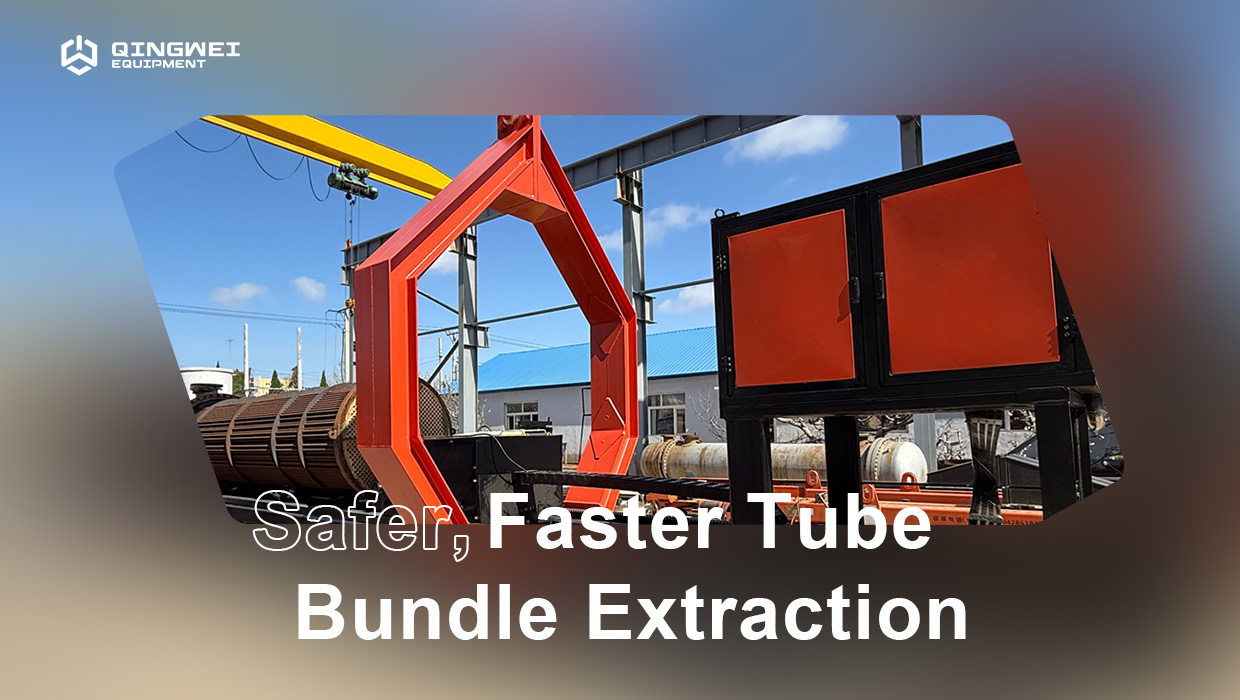
In refinery and petrochemical plants, turnaround time is one of the most critical factors affecting operating cost, production continuity, and maintenance planning. Every extra hour of shutdown can create additional pressure on labor, equipment coordination, and project budgets. That is why improving efficiency during heat exchanger maintenance is so important.
Among the many tasks involved in plant shutdowns, tube bundle extraction and reinsertion is one of the most demanding. Heat exchanger bundles are often heavy, long, and difficult to handle safely. If the wrong method or unsuitable equipment is used, the result can be slow operation, poor alignment, higher safety risk, and unnecessary downtime.
For this reason, more maintenance teams and contractors rely on a professional tube bundle extractor, also known as a bundle puller, to complete the job more efficiently and with better control.
Why Turnaround Downtime Matters
During a refinery turnaround, maintenance schedules are usually tight and highly coordinated. Mechanical work, inspection, cleaning, tube bundle extraction, lifting support, and reassembly often depend on one another. If one step is delayed, the rest of the project can also be affected.
Heat exchanger maintenance is a common part of these shutdown activities. When bundles need to be removed for cleaning, repair, or replacement, the extraction process must be completed safely and efficiently. A slow or unstable pulling process may create delays that affect the overall turnaround plan.
Reducing downtime is not only about working faster. It is also about selecting the right maintenance equipment, reducing handling risks, and making each step of the operation more controlled and predictable.
What a Tube Bundle Extractor Does
A tube bundle extractor is specialized heat exchanger maintenance equipment designed to remove and reinstall exchanger bundles in a more stable and controlled way. Compared with improvised methods or crane-only handling, a bundle extractor is built specifically for the pulling and reinsertion process.
Its function is not simply to generate force. A good tube bundle extractor also helps maintain alignment, support movement, and improve operational control throughout the job. This becomes especially important when dealing with large bundles, limited working space, or repeated extraction tasks during major shutdowns.
Because of this, the right bundle puller can play a direct role in reducing turnaround downtime.
How the Right Tube Bundle Extractor Improves Efficiency
1. Faster Bundle Extraction and Reinsertion
A properly selected machine allows the crew to complete extraction and reinsertion more efficiently. Stable pulling performance helps avoid repeated adjustments, stops, or manual correction during operation.
This is especially valuable when multiple heat exchangers must be serviced within the same turnaround period.
2. Better Alignment During Operation
Bundle handling is not only about pulling force. Alignment is equally important. If the bundle moves unevenly or becomes misaligned, the operation may need to stop for repositioning. In some cases, poor alignment can even increase the risk of equipment damage.
A well-designed tube bundle extractor helps keep movement more controlled, which improves efficiency and reduces interruptions.
3. Reduced Dependence on Manual Handling
When the extraction process depends too heavily on manual adjustment or improvised support, the work often becomes slower and less predictable. A dedicated bundle extractor can reduce unnecessary manual intervention and improve consistency during the job.
This helps maintenance teams work more smoothly, especially during high-pressure turnaround schedules.
4. Improved Safety on Site
Safety and efficiency are closely connected. When an operation is unstable or difficult to control, delays often follow. A safer and more predictable pulling process helps reduce operational risk while also supporting faster execution.
For refineries and petrochemical plants, choosing the right heat exchanger maintenance equipment is therefore both an HSE decision and an efficiency decision.
Key Factors That Affect Turnaround Performance
Not every tube bundle extractor performs the same way in the field. To reduce downtime, buyers should evaluate more than just tonnage.
Important factors include:
- bundle weight
- bundle length
- bundle diameter
- site access conditions
- available working space
- pulling stroke requirements
- machine stability
- power supply conditions
- frequency of maintenance work
A machine that looks sufficient on paper may still perform poorly if it does not match the actual site conditions. That is why equipment selection should always be based on real operating requirements.
Diesel or Electric: Which Is Better for Turnarounds?
The best power type depends on the maintenance environment.
A diesel tube bundle extractor is often a practical choice for refinery turnarounds that require stronger mobility, independent power, and flexible deployment in outdoor or remote work areas. It can be especially useful when site power is limited or when the maintenance location changes frequently.
An electric tube bundle extractor may be more suitable where stable plant power is available and the project requires lower noise, cleaner operation, or stricter environmental control.
The right choice should depend on actual project conditions rather than general preference alone.
Why Stability Matters More Than Force Alone
Many buyers first focus on pulling capacity, which is understandable. However, in real maintenance work, stability often matters just as much as force.
A high-capacity bundle puller is not automatically the best solution if the machine lacks smooth control, proper support, or stable guided movement. In many turnaround situations, operating stability is what helps crews maintain speed, reduce risk, and avoid delays.
That is why buyers should consider not only whether the equipment can pull the bundle, but whether it can do so in a controlled, efficient, and repeatable way.
Choosing the Right Supplier Also Helps Reduce Downtime
Reducing turnaround downtime is not only about machine selection. It also depends on supplier capability.
A reliable supplier should be able to support the project with:
- suitable model recommendation
- clear technical communication
- manufacturing and quality control
- export packing and delivery coordination
- responsive after-sales support
For overseas buyers and contractors, these factors can strongly influence whether the equipment arrives on time and performs as expected during the project.
Final Thoughts
In refinery turnaround planning, every detail that improves maintenance efficiency has value. Tube bundle extraction is one of the key steps that can affect both schedule and safety. Choosing the right tube bundle extractor helps reduce downtime by improving control, reducing manual handling, supporting safer operation, and making bundle extraction more efficient.
For plant owners, maintenance contractors, and EPC teams, the goal is not simply to complete the job. The goal is to complete it with better efficiency, lower risk, and stronger reliability.
If you are planning a heat exchanger maintenance project, selecting the right bundle puller for your actual operating conditions can make a meaningful difference in turnaround performance.


