
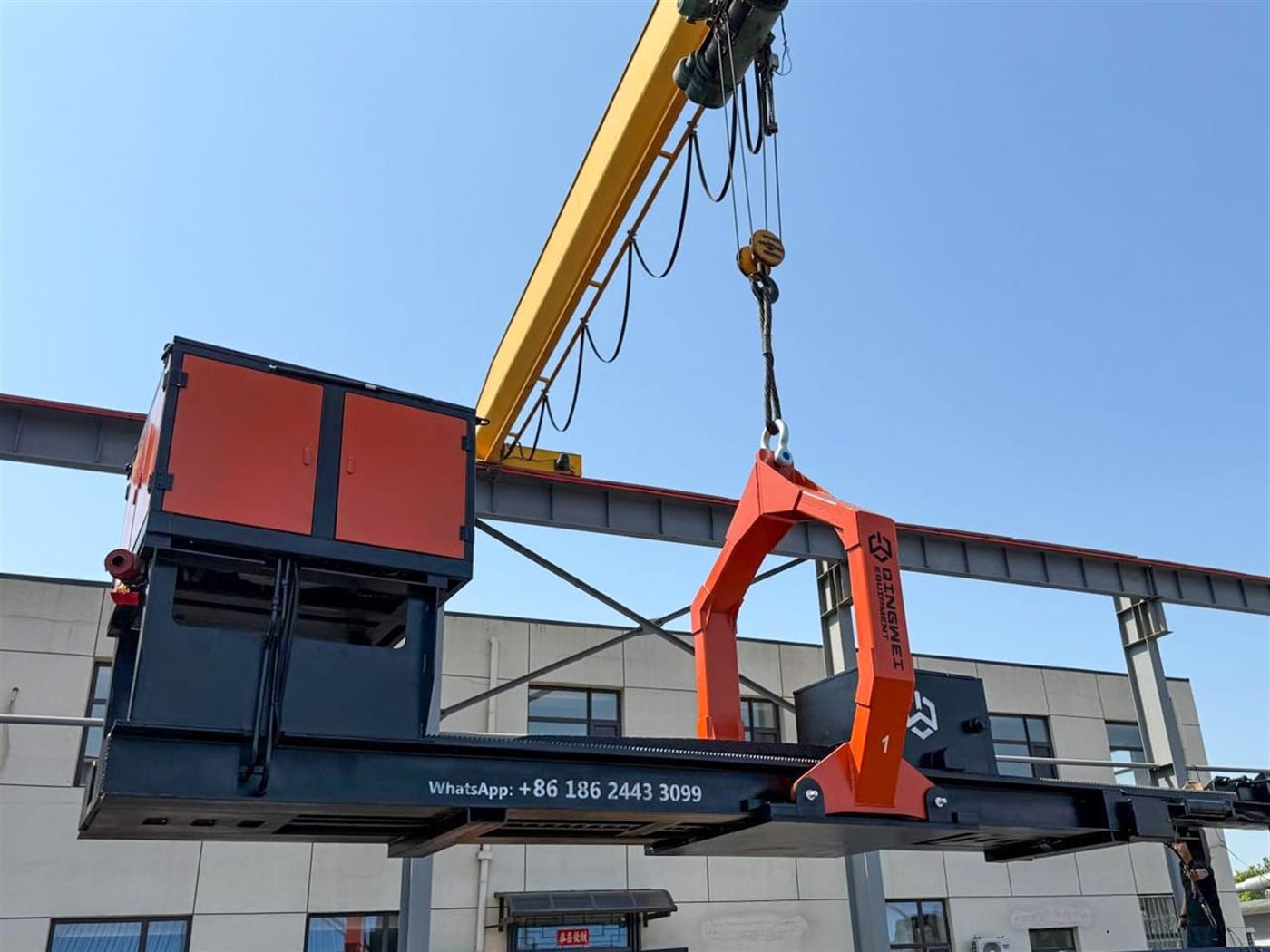
A tube bundle extractor, also called a bundle puller, is purpose-built equipment used to remove and reinstall the internal bundle of a shell-and-tube heat exchanger. The machine applies controlled axial force while supporting and guiding the bundle as it moves out of, or back into, the exchanger shell.
This controlled movement matters because industrial tube bundles can be long, heavy and difficult to release after extended service. Refinery turnarounds and petrochemical shutdowns use bundle extractors to prepare exchangers for cleaning, inspection, repair or replacement without treating bundle removal as an improvised pulling task.
What Is a Tube Bundle Extractor?
A shell-and-tube heat exchanger contains tubes, tube sheets, baffles and supporting components assembled as one removable bundle. Fouling, deposits and corrosion can build up during operation. When maintenance requires access to the bundle or the inside of the shell, the extractor provides the force, travel and support needed to move that assembly in a controlled direction.
The exchanger shell normally remains in position. The extractor is aligned with the exchanger centreline, connected according to the approved work method and used to start the pull. As the bundle travels outward, the equipment and the planned support arrangement carry and guide the exposed length.
Why Are Heat Exchanger Tube Bundles Removed?
- Cleaning: remove fouling, process deposits and residue from the tubes and bundle structure.
- Inspection: check tubes, baffles, tube sheets, supports and other internal components.
- Repair: prepare the bundle for tube plugging, tube replacement or other maintenance work.
- Replacement: remove a damaged or end-of-life bundle and install a replacement.
- Shell access: make the exchanger shell available for internal inspection and cleaning.
How Does a Tube Bundle Extractor Work?
1. Position and align
The extractor is positioned so its pulling line matches the exchanger centreline. Working height, ground or platform support, lifting access and bundle travel clearance must be confirmed before pulling begins.
2. Start the initial pull
After the exchanger has been isolated and prepared, controlled force is applied to release the bundle. This breakaway stage can require more force than the bundle weight suggests because fouling, corrosion, deposits and adhesion increase resistance.
3. Extract and support
As the bundle moves out of the shell, the extractor and planned support points carry the exposed length and help preserve alignment. The site team monitors movement and stops if the bundle binds, shifts or travels unevenly.
4. Maintain and reinsert
Cleaning, inspection or repair can proceed after removal. A correctly configured extractor can then assist with controlled reinsertion, subject to the approved rigging, alignment and site-safety procedure.
What Does the Extractor Control?
- Axial pulling force for bundle release and travel.
- Support as more bundle length leaves the shell.
- Alignment between the extractor and exchanger centreline.
- Travel and positioning during extraction and insertion.
- Controlled reinsertion after maintenance is complete.
The machine does not replace the lifting plan, engineering review or site controls. It is one part of a coordinated maintenance method that can also involve cranes, support stands, cleaning equipment and inspection teams.
Diesel vs Electric Tube Bundle Extractors
The power source is chosen around the worksite. Diesel tube bundle extractors provide an independent onboard power source where suitable site electricity is unavailable or temporary. Electric tube bundle extractors can suit fixed locations with an appropriate industrial supply. The final electric drive and control arrangement must be confirmed from approved technical records.
What Information Is Needed for Selection?
| Required data | Why it matters |
|---|---|
| Bundle weight | Provides the basic load reference for capacity review. |
| Bundle length | Defines working length, travel and support requirements. |
| Bundle diameter | Confirms frame and support compatibility. |
| Exchanger drawing and centreline | Supports alignment, connection and positioning review. |
| Site photos and available space | Shows access, elevation, obstacles and extraction clearance. |
| Previous extraction condition | Identifies fouling, corrosion or difficult breakaway history. |
| Power preference | Matches Diesel or electric power to site utilities and restrictions. |
Bundle weight is not the same as required pulling force. Read the Pulling Force Guide before selecting capacity from tonnage alone.
Frequently Asked Questions
Is a tube bundle extractor the same as a bundle puller?
Yes. Both terms commonly refer to equipment designed to remove, support and reinstall heat exchanger tube bundles.
Can the equipment also reinsert the bundle?
Yes, when the machine and work method are configured for controlled reinsertion after maintenance.
Does a 20-ton bundle always require a 20-ton extractor?
No. Pulling resistance can be higher than bundle weight because of fouling, corrosion, adhesion, deposits and alignment conditions.
Need a Model Recommendation?
Use the Tube Bundle Extractor Selection Guide, then request a quote with the bundle weight, length, diameter, exchanger drawing, working height and site photos.