
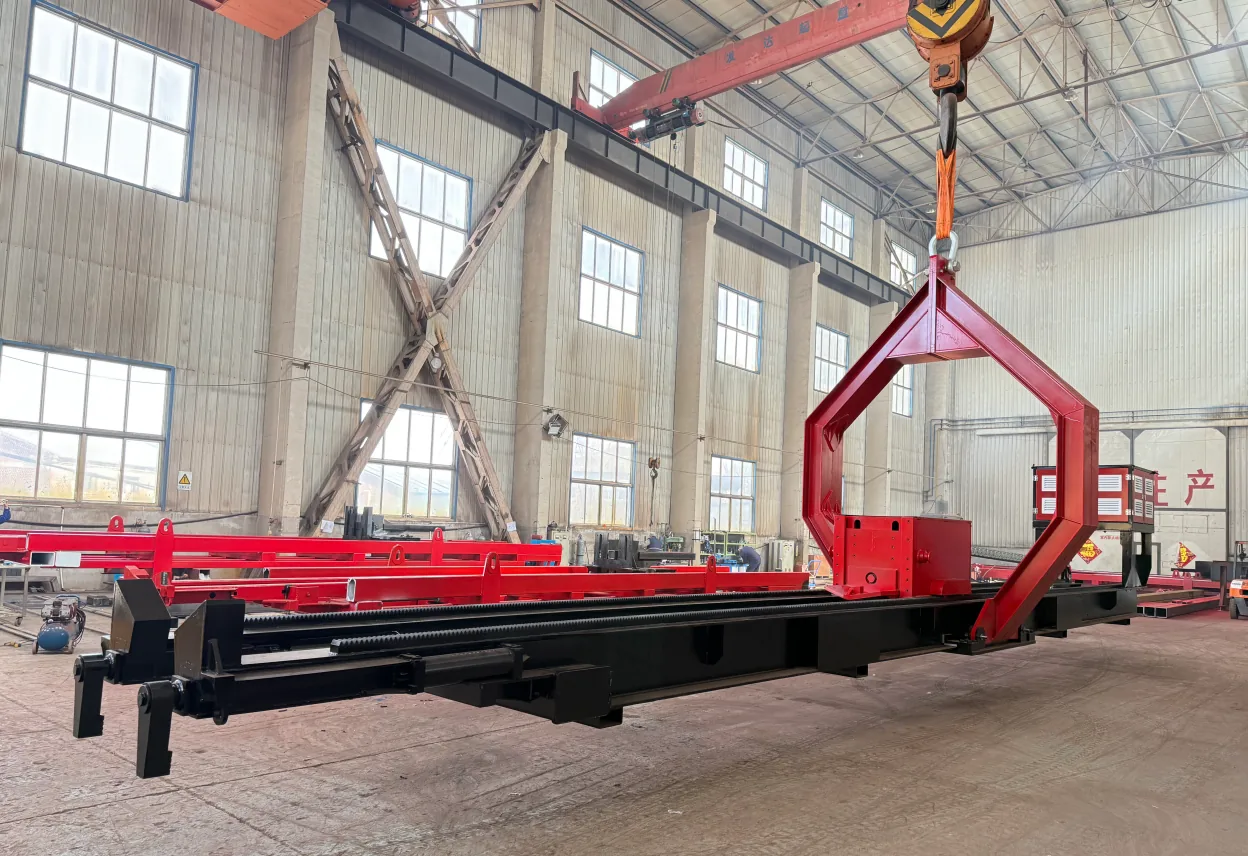
Electric or diesel-powered bundle extractor — which one should you choose? This is one of the questions we are frequently asked by customers planning tube bundle removal and installation work.
QINGWEI manufactures both electric and diesel-powered tube bundle extractors. Both power systems are mature, reliable options for heat exchanger maintenance. The practical question is not which one is universally better, but which bundle extractor fits the actual working conditions.
In China, electric bundle extractors are widely used where industrial power is readily available. In overseas refineries, petrochemical plants and turnaround projects, diesel bundle extractors are often preferred because the equipment can work independently as the jobsite changes.
Why Are Electric Bundle Extractors So Common in China?
Many Chinese refineries, heat exchanger manufacturers and maintenance companies have convenient access to industrial electrical power. Where power is available, an electric bundle extractor can offer practical benefits.
Stable and Simple Lifting
Our electric bundle extractor configuration uses four lifting points. When it is connected correctly to the crane, the lifting points work together to keep the machine relatively stable and level during positioning. For workshops and jobsites where equipment is lifted and repositioned frequently, this arrangement can simplify handling.
More Compact Structure
An electric power system does not require a diesel engine, fuel tank and the auxiliary components of an engine-powered machine. For comparable working capacity, this can allow a more compact overall configuration and more protected routing of hoses and cables.
Lower Weight Potential
Depending on the selected model and configuration, an electric tube bundle extractor can be lighter than a comparable diesel configuration. The actual machine weight still depends on pulling capacity, bundle length, frame dimensions and the final approved design.
Well Suited to Workshops and Fixed Working Areas
Electric models are particularly suitable for heat exchanger manufacturing workshops, tube bundle assembly areas, fixed maintenance facilities and production lines where bundles are repeatedly installed into exchanger shells. There is less need for an independent onboard power source when the equipment works within the same production area.
No Diesel Exhaust at the Machine
Electric operation produces no diesel engine exhaust at the machine. That can be useful in indoor workshops, enclosed production areas and locations with stricter exhaust or lower-noise preferences.
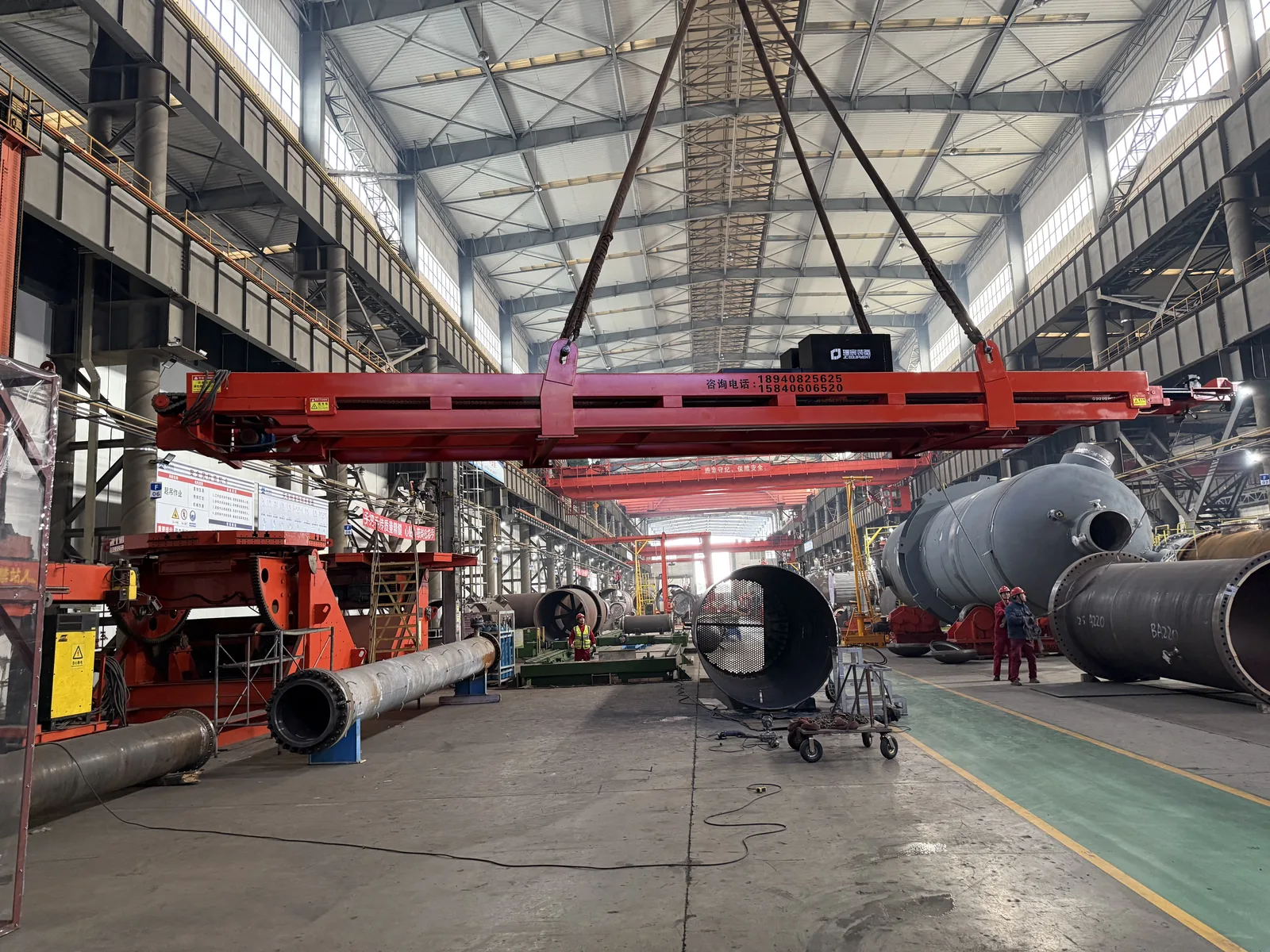
Electric Bundle Extractors Can Be More Efficient for Transportation
Electric models can often have a more compact overall configuration because they do not require the same engine arrangement used on diesel machines. Depending on dimensions and packing method, this can improve container utilization when several machines are purchased. Exact loading quantities should always be confirmed from the selected model dimensions and weight.
The Main Limitation of an Electric Bundle Extractor: Power Supply
An electric machine must be connected to a suitable electrical supply while operating. Before selection, confirm voltage, frequency, available power capacity, cable route, distance from the power source and whether the connection must be rearranged after each relocation.
Inside a fixed workshop these points are usually straightforward. During a refinery turnaround, a bundle extractor can move from one exchanger or process unit to another several times in a shift. Arranging a new power connection at each location adds coordination to the maintenance operation.
Why Do Many Overseas Customers Prefer Diesel Bundle Extractors?
The main advantage of a diesel bundle extractor is its independent power source. Once the machine is fuelled and positioned, it can work without relying on an external electrical connection. This is valuable for refinery, petrochemical and turnaround maintenance where the work area changes continuously.
Diesel power does not automatically mean greater pulling force. Both diesel and electric machines can be designed for heavy-duty tube bundle extraction. The diesel advantage is greater independence and flexibility at the jobsite.
One Tank of Fuel Can Support Extended Operation
Operating autonomy is a practical benefit for field work. Fuel consumption depends on bundle weight, pulling resistance, working cycle, engine load, idle time and actual project conditions. For a contractor working across several exchangers, avoiding repeated temporary power arrangements can simplify mobilisation and operation.
- Refinery turnaround and petrochemical shutdown maintenance
- Outdoor heat exchanger maintenance
- Jobsites where power is difficult to arrange
- Projects requiring frequent machine relocation
- Temporary maintenance areas and multi-exchanger campaigns
Diesel Bundle Extractors Are Also Durable and Reliable
Diesel-powered systems are mature and well suited to heavy industrial maintenance. They do, however, add routine engine management: fuel, engine oil, filters, cooling system, starter battery and normal engine service. This is not a reliability disadvantage; it is simply a different maintenance requirement from an electric configuration.
Refinery Safety Requirements Should Also Be Considered
Before a diesel-powered machine is finalised for a refinery or petrochemical plant, review the owner's jobsite safety and HSE requirements. Depending on the area, the project may require a spark arrestor, engine air-intake shutoff valve, emergency stop system or other project-specific provisions. Requirements vary by site and should be confirmed before production.
Electric vs. Diesel Bundle Extractor: Which One Should You Choose?
Choose an Electric Bundle Extractor When
- A stable industrial power supply is available.
- The machine works mainly in a fixed area or workshop.
- Tube bundle production and exchanger assembly are key applications.
- Lower exhaust and engine noise are preferred.
- Compact transportation and simplified power-unit maintenance are important.
Choose a Diesel Bundle Extractor When
- Electrical power is difficult to arrange.
- The equipment mainly works outdoors.
- The machine must move frequently between heat exchangers.
- The project is a refinery turnaround or shutdown.
- Independent power and jobsite flexibility are important.
Quick Comparison: Electric vs. Diesel Bundle Extractor
| Factor | Electric Bundle Extractor | Diesel Bundle Extractor |
|---|---|---|
| Power source | External industrial power | Independent diesel engine |
| Best environment | Workshop or fixed area | Refinery or outdoor jobsite |
| Mobility | Depends on power connection | High |
| Frequent relocation | Less convenient if power must be reconnected | Very convenient |
| Lifting configuration | Compact four-point lifting possible | Commonly integrated with lifting frame |
| Equipment structure | Generally simpler and more compact | Includes engine and fuel system |
| Exhaust | No engine exhaust at the machine | Diesel exhaust |
| Noise | Generally lower | Engine noise present |
| Maintenance | Electrical and hydraulic systems | Hydraulic system plus diesel engine maintenance |
| Best use case | Manufacturing and fixed maintenance | Turnaround and mobile maintenance |
Power Source Is Only One Part of Bundle Extractor Selection
Electric or diesel power is only one part of selecting the correct tube bundle extractor. Confirm the maximum bundle weight, bundle length, bundle diameter, exchanger installation height, crane capacity, working area, access, power availability, relocation frequency and maintenance scope.
These inputs affect required pulling capacity, main frame length, lifting configuration, extension requirements, transportation method and the final equipment configuration. Read the Pulling Force Selection Guide before selecting capacity from tonnage alone.
Electric or Diesel? There Is No Universal Answer
A diesel machine is not automatically better, and neither is an electric machine. A workshop with reliable industrial power may not need the fuel and engine maintenance of a diesel configuration. A large turnaround where the machine moves continuously around the plant may not benefit from repeated temporary electrical connections.
Make the equipment fit the working conditions - not the working conditions fit the equipment. Send bundle weight, length, diameter, exchanger centreline height, jobsite power conditions, indoor or outdoor use, approximate exchanger count and any project-specific requirements for a practical selection review.
Need Help Choosing a Bundle Extractor?
Send us your tube bundle weight, length, diameter and jobsite conditions. Our engineering team can recommend a suitable electric or diesel bundle extractor configuration for your application.