
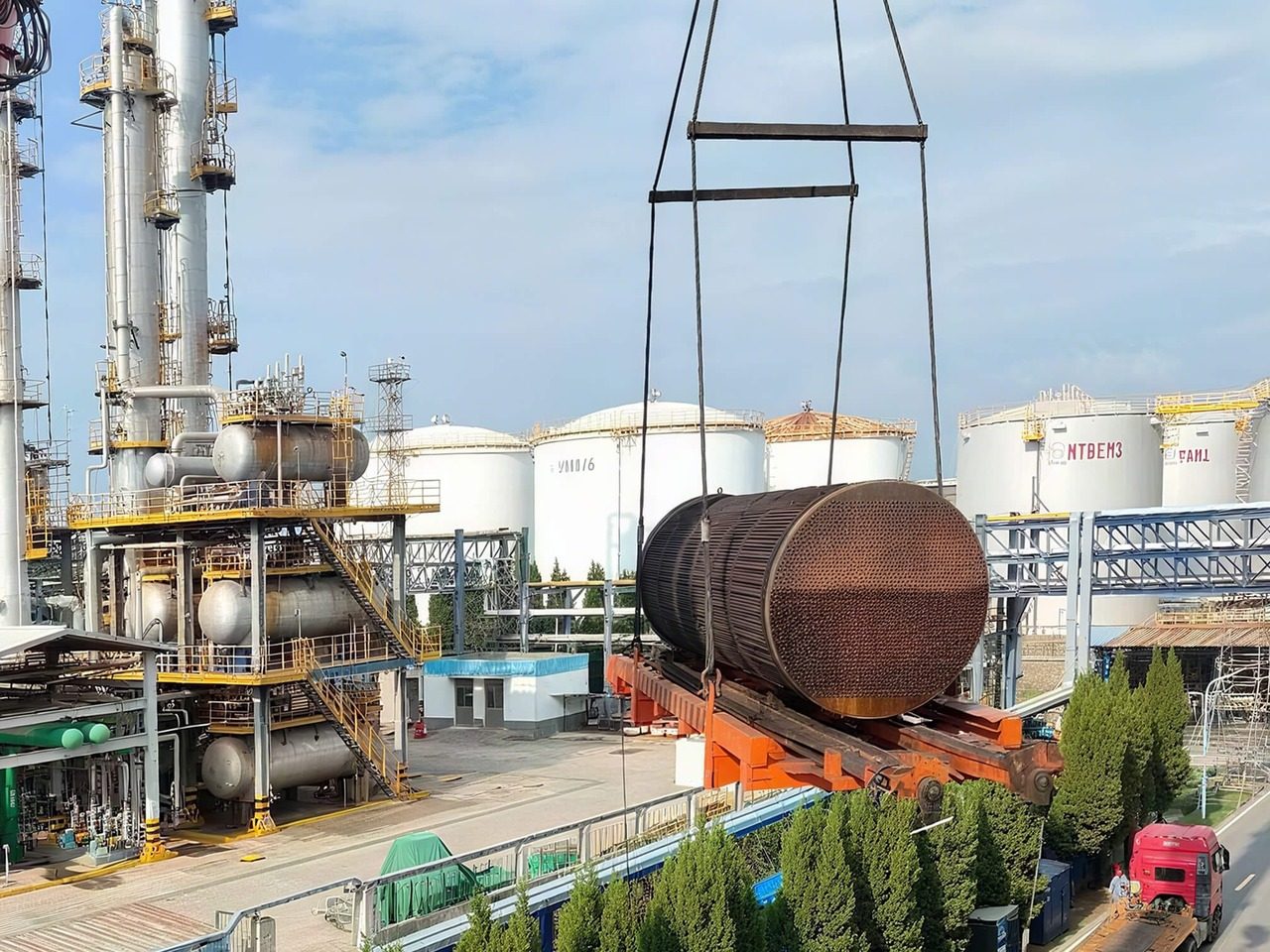
A tube bundle extractor, also known as a bundle puller, is one of the key pieces of equipment used during shell-and-tube heat exchanger maintenance. It is designed to pull out, support, transport and reinstall heavy tube bundles during refinery turnarounds, petrochemical shutdowns, power plant overhauls and industrial maintenance projects.
Compared with crane-only handling or improvised pulling methods, a purpose-built tube bundle extractor gives the maintenance team a stable support platform, controlled hydraulic movement and a safer working distance. For plants where shutdown time is limited, this can make a direct difference to work sequence, manpower planning and site safety.
Why Heavy-Duty Bundle Extraction Matters in Refinery Turnarounds
Shell-and-tube heat exchangers often work for long periods under high temperature, pressure, fouling and corrosive conditions. When the unit is opened for maintenance, the tube bundle may be heavy, tight, contaminated or difficult to move. A simple weight figure is not always enough to judge the real extraction difficulty.
During a refinery turnaround, the maintenance contractor must coordinate lifting, scaffolding, cleaning, inspection, repair and reinstallation in a limited time window. If bundle extraction is slow or unstable, downstream work can be delayed. A well-matched bundle extractor helps make this part of the job more controlled and repeatable.
Main Benefits of Using a Tube Bundle Extractor
The following table summarizes the practical value of using a dedicated bundle extractor instead of relying only on cranes, forklifts or manual assistance.
| Maintenance Challenge | How a Tube Bundle Extractor Helps |
|---|---|
| Heavy bundle handling | Provides rated load support and a stable extraction platform. |
| Difficult initial pulling | Uses hydraulic pulling force to start movement in a controlled way. |
| Alignment during reinsertion | Helps keep the bundle level and aligned with the exchanger shell. |
| Limited shutdown time | Improves work sequence and reduces dependence on improvised site methods. |
| Operator safety | Allows remote or controlled operation from a safer working position. |
| Equipment protection | Reduces uncontrolled movement that may damage tubes, baffles or shell components. |
Selecting the Right Capacity Is the First Step
Many buyers start by asking for a 25T, 45T, 65T, 100T or 125T machine. This is useful, but rated load is only one part of the selection process. The correct model should be selected according to actual bundle weight, pulling resistance, bundle length, exchanger diameter, centerline height and working space.
- Maximum tube bundle weight
- Expected pulling force and historical extraction difficulty
- Maximum bundle length and required stroke
- Tube sheet diameter and shell opening size
- Heat exchanger centerline height from ground
- Available space in front of the exchanger
- Transport route inside the plant or workshop
- Power source requirement: diesel, electric or customized configuration
For heavy-duty applications, the selected machine should include a practical safety margin. Choosing a machine that only matches the theoretical bundle weight may not be enough when the bundle is stuck, fouled or difficult to start.
Rated Load and Pulling Force Are Not the Same
Rated load describes the weight the machine is designed to support. Pulling force describes the hydraulic force used to move the tube bundle out of the shell. In real maintenance work, both numbers matter. A bundle may weigh less than the rated load but still require higher pulling force because of corrosion, deposits, friction or deformation.
Rated load is related to
- Bundle weight
- Support frame strength
- Stability during movement
- Transportation and lifting planning
Pulling force is related to
- Initial extraction resistance
- Fouling and corrosion level
- Friction between bundle and shell
- Hydraulic cylinder and pulling system design
When preparing a quotation, maintenance teams should share both bundle weight and any known extraction difficulty. If there are previous maintenance records or site photos, they can help the supplier recommend a more reliable configuration.
Key Configuration Points for Heavy-Duty Models
A heavy-duty tube bundle extractor should be reviewed as a complete system. The hydraulic power unit, main frame, pulling mechanism, support rollers, lifting points and control system all affect jobsite performance.
| Configuration | Why It Matters |
|---|---|
| Main frame structure | Determines rigidity, stability and long-term durability under repeated heavy-load work. |
| Hydraulic pulling system | Controls the pulling and pushing movement of the tube bundle. |
| Support rollers or V-blocks | Help support the bundle and reduce uncontrolled movement during extraction. |
| Power unit | Diesel power is flexible for outdoor field work; electric power is suitable for workshops or plants with reliable power. |
| Remote and wired control | Improves operating convenience and gives the team a backup control option. |
| Emergency stop and manual backup | Supports safer operation and better response to unexpected site conditions. |
Diesel or Electric: Choose According to the Jobsite
Power source selection should be based on the work environment. A diesel tube bundle extractor is often suitable for outdoor refinery units, remote maintenance locations or sites where temporary power is difficult to arrange. An electric tube bundle extractor is often suitable for workshops, indoor maintenance bays and plants with reliable three-phase power.
Site Preparation Before Bundle Pulling
Even with the correct equipment, site preparation is still essential. The team should review exchanger access, lifting points, ground condition, traffic route, scaffolding, clearance and safety isolation before extraction begins.
- Confirm the exchanger has been isolated, cleaned and released for maintenance according to plant rules.
- Check available space in front of the exchanger for the full extraction stroke.
- Verify ground bearing condition and machine positioning area.
- Confirm crane or lifting support for initial positioning if required.
- Review bundle centerline height and machine adjustment range.
- Keep the working area clear of unnecessary personnel.
- Test remote control, wired control, emergency stop and manual backup before operation.
Good preparation reduces the risk of delays during the shutdown window. It also helps the operator keep the pulling process smooth, stable and visible.
Quality Control and Factory Testing
For heavy-duty equipment, quality control should be visible before shipment. Factory testing, hydraulic movement inspection, structural checks, control system verification and load-related testing help customers understand the machine condition before it arrives at site.
- Hydraulic system movement and pressure inspection
- Pulling, pushing, lifting and travel function testing
- Remote control and wired control verification
- Emergency stop function check
- Frame, roller, cylinder and connection inspection
- Packing review for sea transport or long-distance delivery
For international projects, buyers can also request technical documents, operation manuals, spare parts recommendations and test records according to project requirements.
RFQ Checklist for a Heavy-Duty Tube Bundle Extractor
A clear RFQ saves time for both the buyer and manufacturer. The more accurate the information, the easier it is to recommend a suitable machine and avoid over-sizing or under-sizing.
| Information | Example Detail |
|---|---|
| Bundle data | Weight, length, diameter, tube sheet size and expected pulling resistance. |
| Site layout | Working space, centerline height, access route and ground condition. |
| Power requirement | Diesel engine or electric motor; for electric models, confirm voltage and frequency. |
| Control method | Wireless remote control, wired control and manual backup preference. |
| Transport requirement | Container type, port of destination and site unloading conditions. |
| Documents | Manual, certificate, test record, spare parts list and packing list requirements. |
Qingwei Equipment Support
Qingwei Equipment manufactures tube bundle extractors and bundle pullers for refinery, petrochemical, power plant and industrial heat exchanger maintenance. Machines can be configured according to rated load, pulling force, bundle length, bundle diameter, power type, control method and customer site requirements.
For customers who need a heavy-duty solution, our team can review bundle data, site drawings, photos and operating requirements before recommending a suitable configuration. This helps reduce selection risk and gives the maintenance team a clearer plan before the equipment is ordered.
Conclusion
A heavy-duty tube bundle extractor is not just a pulling machine. It is part of the overall turnaround strategy for safer, faster and more controlled heat exchanger maintenance. When the machine capacity, pulling force, power type, site clearance and control system are correctly matched, the maintenance team can reduce uncertainty and improve job efficiency.
Before ordering, buyers should confirm the real working conditions instead of selecting only by price or nominal capacity. With complete bundle data and site information, Qingwei Equipment can help recommend a practical tube bundle extractor solution for your next refinery turnaround or heat exchanger overhaul project.
FAQ
Why is a tube bundle extractor important for refinery turnaround work?
A tube bundle extractor supports controlled removal and reinsertion of shell-and-tube heat exchanger bundles, helping turnaround teams reduce manual handling, improve positioning accuracy and keep maintenance work more predictable.
How should a maintenance team choose the capacity of a bundle extractor?
Capacity should be selected by reviewing bundle weight, pulling resistance, bundle length, diameter, site clearance and historical extraction difficulty. A practical safety margin is recommended instead of selecting a machine that only matches the theoretical bundle weight.
What information should be included in a tube bundle extractor RFQ?
Useful RFQ information includes bundle weight, length, diameter, exchanger centerline height, site photos, working area layout, preferred power type, voltage if electric, control requirements, lifting plan and any transport restrictions.
Can Qingwei provide diesel and electric heavy-duty tube bundle extractors?
Yes. Qingwei Equipment can configure diesel or electric tube bundle extractors according to project requirements, including rated load, pulling force, bundle length, diameter, control method and site conditions.
Need a heavy-duty tube bundle extractor for your next turnaround?
Send us your heat exchanger bundle dimensions, weight, site layout and project requirements. Qingwei can recommend a suitable bundle extractor configuration for your maintenance work.