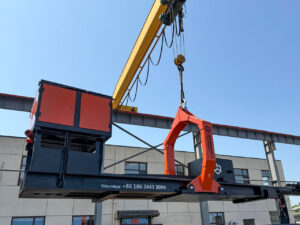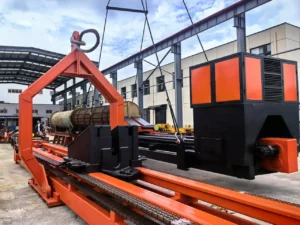
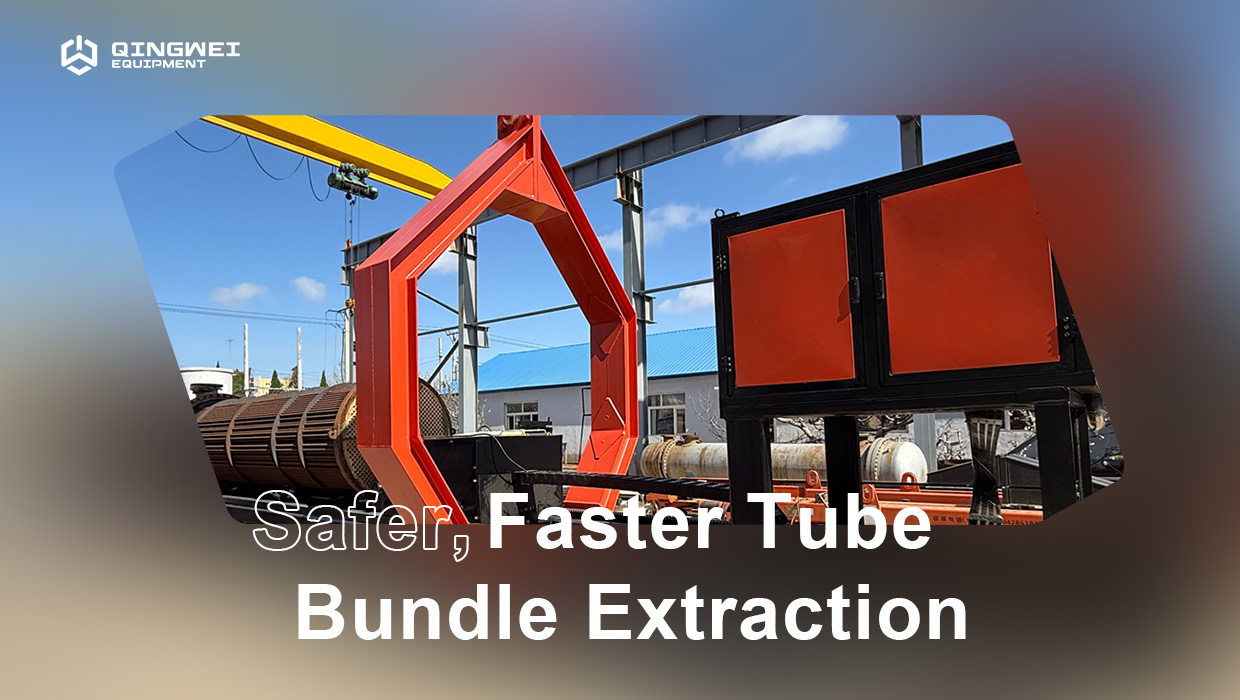
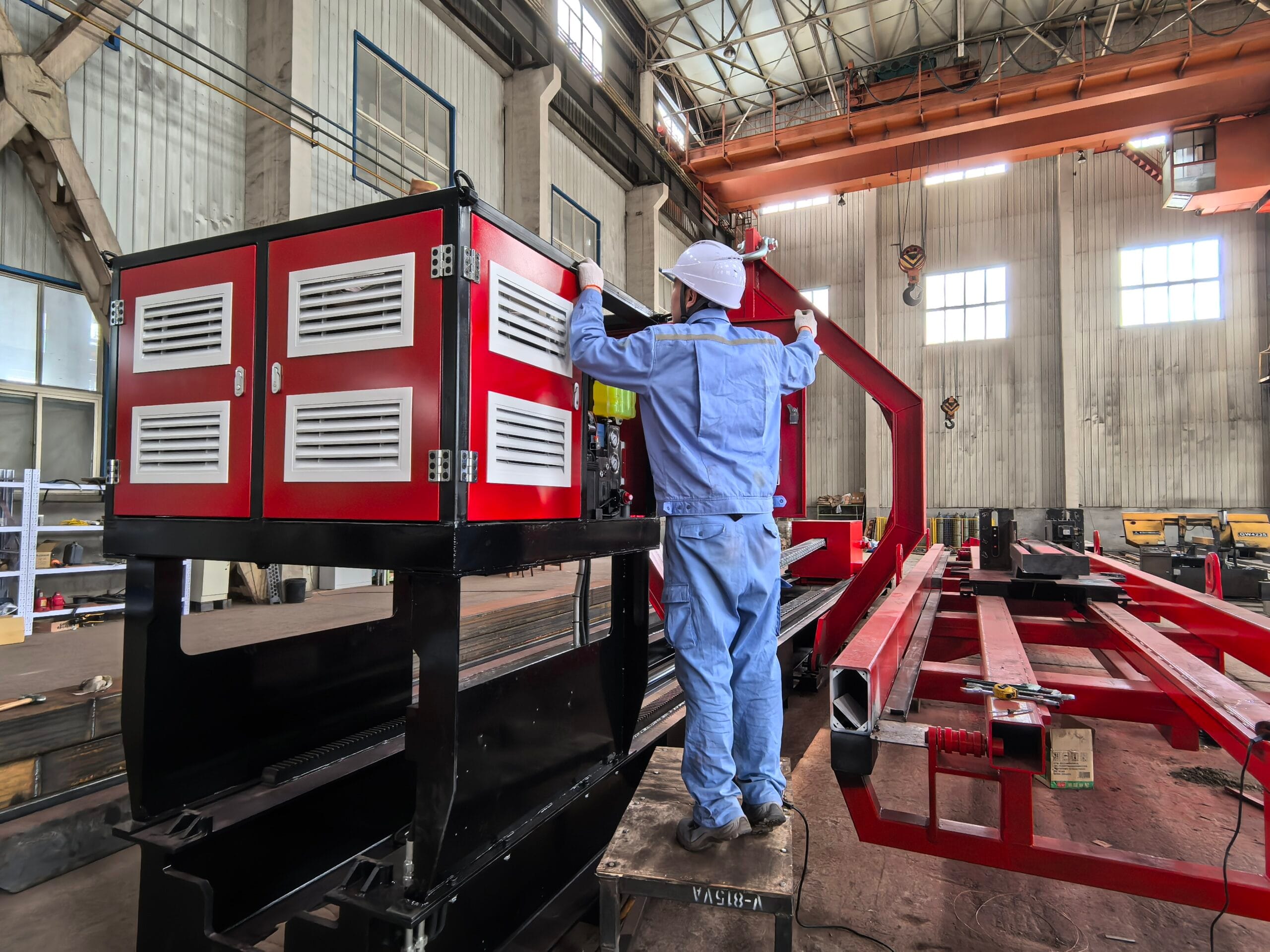
In heat exchanger maintenance, one of the most important steps is removing and reinstalling the tube bundle safely and efficiently.
For many plants and contractors, the real question is not whether the bundle can be pulled out, but how to do it with better control, lower risk, and less downtime.
Two methods are commonly considered during maintenance planning: using a crane or using a tube bundle extractor.
Both can be used in certain situations, but they are not the same in terms of operating stability, manpower requirements, safety control, or turnaround efficiency. For refinery and petrochemical projects, choosing the right method can have a direct impact on shutdown schedules and jobsite performance.
What Does a Crane Do in Bundle Removal?
A crane is a lifting device. It is often used to handle heavy loads on industrial sites, including lifting exchanger components, moving structures, or supporting maintenance work.
In some traditional bundle removal jobs, cranes have been used to assist with pulling or lifting the tube bundle out of the shell. This method may appear simple, especially when a crane is already available on site.
However, crane-based bundle handling is not originally designed to provide the same type of guided, continuous, and controlled extraction movement that a dedicated extractor can offer.
What Does a Bundle Extractor Do?
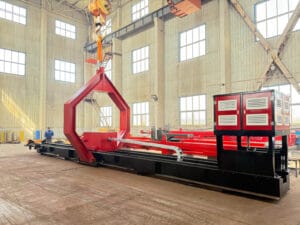
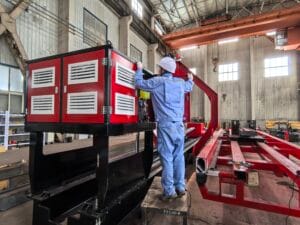
A tube bundle extractor is a purpose-built machine used to pull out and push back the tube bundle of a shell-and-tube heat exchanger. It is designed specifically for heat exchanger maintenance work.
Compared with general lifting equipment, a bundle extractor focuses more on:
- controlled pulling force
- stable alignment
- guided travel during extraction and reinsertion
- reduced manual interference
- safer handling of long and heavy bundles
This makes it more suitable for refinery and petrochemical maintenance applications where precision and stability matter.
1. Control and Stability
This is one of the biggest differences between the two methods.
A crane is mainly used for lifting. Even when operated by an experienced team, suspended handling can make fine alignment more difficult, especially when the bundle is long, heavy, or being removed in a restricted area.
A bundle extractor, by comparison, is designed for linear, controlled movement. The pulling process is more stable, which helps reduce shaking, misalignment, and uneven force during extraction.
For maintenance teams, this usually means a smoother operation and better protection of the bundle and exchanger shell.
2. Safety Performance
Safety is always a major factor during shutdown work.
When cranes are used for bundle extraction support, the job often involves suspended loads, closer coordination between operators, and greater dependence on manual guidance. This can increase risk in congested or high-pressure maintenance environments.
A bundle extractor helps improve safety by keeping the pulling process more controlled and predictable. Operators can manage the movement more precisely, and the need for risky manual intervention is reduced.
In practical maintenance work, better control usually means better safety.
3. Turnaround Efficiency
During a refinery shutdown or turnaround, time matters.
A crane may be useful for general lifting tasks, but it is not always the most efficient option for repeated bundle extraction work. Crane scheduling, repositioning, and coordination can add time to the maintenance process.
A dedicated bundle extractor is built specifically for exchanger service, which means the extraction and reinsertion workflow can be more direct and repeatable.
For plants handling multiple exchangers during one shutdown, this can help reduce delays and improve overall turnaround efficiency.
4. Manpower and Coordination
Crane-based bundle work often requires more coordination between multiple people, including lifting personnel, signalers, and maintenance crew.
A bundle extractor can simplify the operation. Because the equipment is purpose-built for the task, the process is often easier to organize and more consistent from one job to the next.
This does not only improve efficiency. It also helps reduce operational complexity on site.
5. Suitability for Tight or Demanding Jobsite Conditions
Not all maintenance jobs happen in open areas with ideal lifting conditions.
Some exchanger locations have:
- limited operating space
- restricted crane access
- stricter safety requirements
- difficult alignment conditions
In these cases, a bundle extractor is often the more practical solution because it is designed around the extraction process itself rather than general lifting.
This is especially important in refinery and petrochemical units where space, access, and work sequencing can directly affect maintenance planning.
Diesel or Electric: Which Extractor Fits the Job Better?
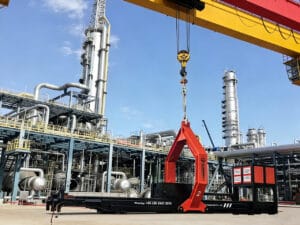
The choice also depends on site conditions. A diesel bundle extractor is often better for outdoor shutdown work, remote areas, and projects where external power is limited. An electric bundle extractor is often more suitable for plants with stable power supply, lower-noise requirements, or enclosed operating environments.
Is a Crane Still Useful?
Yes.
A crane still plays an important role in many maintenance projects.
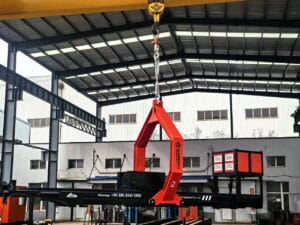
It may still be needed for lifting the extractor into place, moving components, or supporting other stages of shutdown work. But when the main task is controlled tube bundle extraction and reinsertion, a dedicated bundle extractor is usually the better choice.
So the question is not “crane or bundle extractor” in the absolute sense. The better question is: which equipment should handle the extraction job itself?
For most heat exchanger maintenance applications, the answer is the bundle extractor.
Final Thoughts
A crane is a general lifting solution. A bundle extractor is a specialized extraction solution.
If your project only looks at load capacity, the difference may not seem obvious at first. But if you look at safety, stability, control, manpower, and shutdown efficiency, the advantages of a dedicated bundle extractor become much clearer.
For refinery, petrochemical, and industrial maintenance projects, the right equipment is not only about getting the job done. It is about getting the job done safely, smoothly, and efficiently.
If you are planning a heat exchanger maintenance project, explore Qingwei’s tube bundle extraction solutions and bundle extractor product range to find the right solution for your site conditions.