
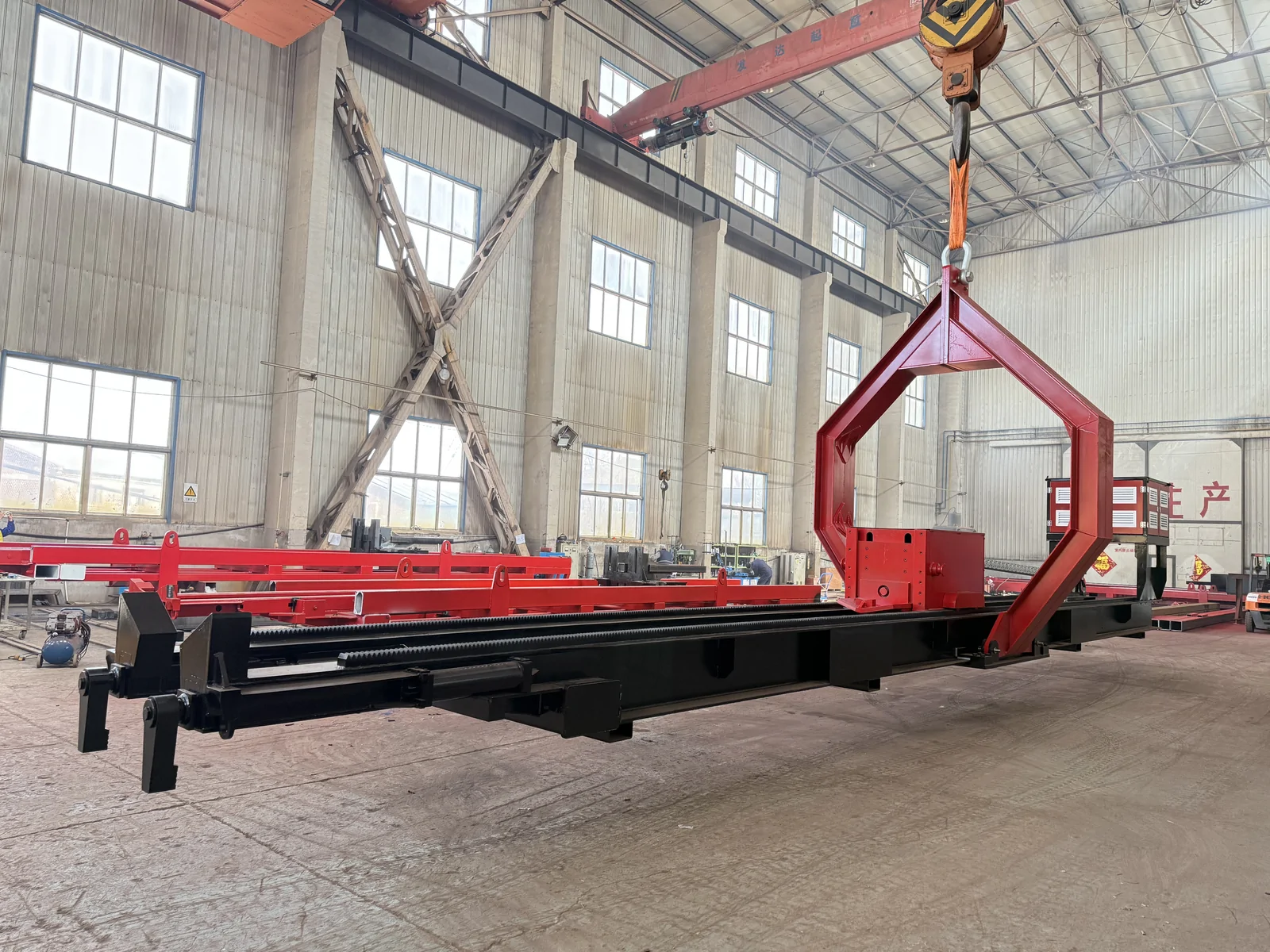
Buying a tube bundle extractor involves more than selecting a capacity and agreeing on a price. Before a purchase order is issued, the buyer should be able to connect the commercial quotation to a defined machine configuration, a clear scope of supply and an agreed inspection and document package.
This guide explains the main documents buyers should review before ordering a bundle puller. It focuses on the technical specification, general arrangement or assembly drawing, scope of supply, factory acceptance documents, manuals, certificates and final document register. Buyers who are still comparing equipment types can first review Qingwei's tube bundle extractor range.
Why the Document Package Matters Before the PO
A quotation may identify a model and total price, but the purchase order becomes much clearer when the supporting documents define what that model means for the actual project. The equipment data should be consistent across the quotation, technical specification, drawing and scope list.
This review is especially important when the machine must serve more than one heat exchanger, operate in restricted working space or include project-specific controls, extensions, testing or documentation. If requirements remain unclear until after the PO, changes can affect engineering time, delivery planning, packing or site preparation.
The objective is not to request the largest possible document package. It is to agree on the documents needed to verify the selected equipment and manage the purchase responsibly. A practical review normally covers three questions:
- Does the configuration match the confirmed bundle and site data?
- Are included equipment, options and exclusions clearly separated?
- Are inspection, delivery and support responsibilities recorded before manufacture and shipment?
1. Review the Tube Bundle Extractor Technical Specification
The tube bundle extractor technical specification should identify the offered configuration in a form that engineering and maintenance teams can review. It should not rely only on a product family name.
At minimum, check whether the document clearly states:
- model designation and power arrangement;
- rated bundle load;
- maximum pulling force;
- applicable tube sheet or bundle diameter range;
- working length or modular length coverage;
- principal machine dimensions and approximate weight;
- control arrangement included in the offer;
- main project-specific options;
- referenced exchanger and site data;
- document revision and issue status.
Rated bundle load and maximum pulling force should be listed separately. Bundle load describes the weight the machine is configured to handle, while pulling force relates to the force available to start and control extraction. Fouling, corrosion, sticking and alignment conditions can make the required pulling force different from the bundle weight.
The specification should also state the basis of selection. If one machine is intended to cover several exchangers, the buyer should provide an exchanger schedule showing the maximum weight, length, diameter, centreline height and available clearance for each unit. At the enquiry stage, Qingwei's complete tube bundle extractor RFQ checklist can help organise these inputs.
2. Check the General Arrangement or Bundle Puller Assembly Drawing
A bundle puller assembly drawing or general arrangement drawing helps the project team understand how the offered machine fits the site and how its main sections are arranged. It is different from a detailed manufacturing drawing. Its purpose is to confirm the overall configuration and interfaces relevant to the buyer.
Review the drawing for:
- overall machine length, width and height;
- transport or modular section dimensions where applicable;
- position of the pulling frame, carriage and support sections;
- front or rear extensions included in the configuration;
- principal lifting or handling points identified by the supplier;
- working direction and required operating envelope;
- connection or interface points relevant to installation;
- drawing number, revision and model reference.
Compare the drawing with the access route, lifting plan and space in front of the exchanger. A technically capable machine can still create a site problem if the transport envelope, lifting arrangement or extraction clearance has not been considered. Site teams should also verify that supporting structures and lifting methods are covered by the project plan rather than assumed to be part of the machine supply.
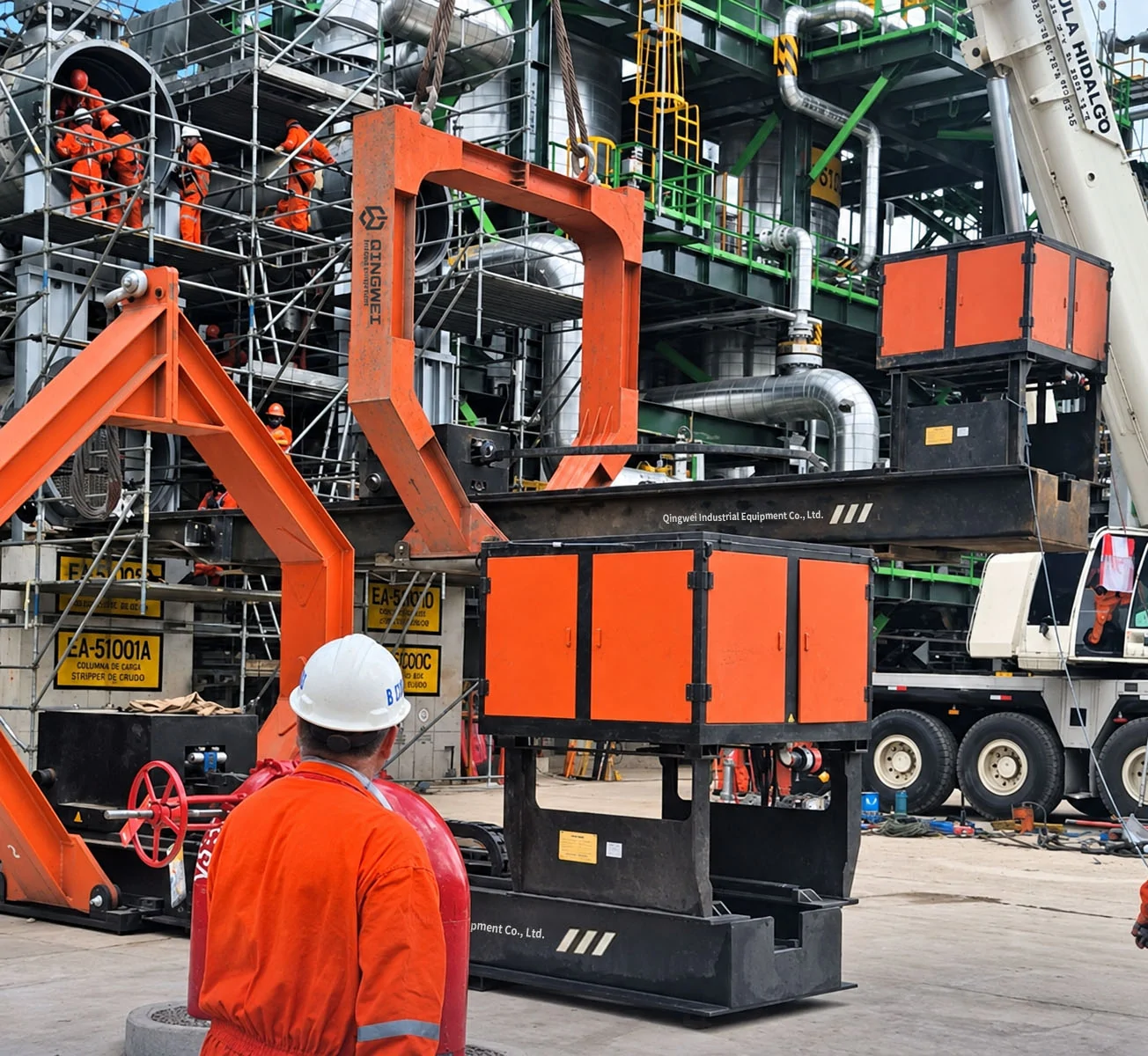
3. Define the Tube Bundle Extractor Scope of Supply
The tube bundle extractor scope of supply should be itemised so the buyer can see what is included in the base equipment, what is optional and what is excluded. This is one of the most important documents for preventing differences between technical expectations and the commercial order.
Depending on the confirmed configuration, the list may address:
- core machine and power unit;
- pulling head, connection components and standard tools;
- front, rear or modular extensions;
- local, wired or wireless controls;
- hoses, cables or connection accessories;
- transport supports and export packing;
- operating and maintenance documentation;
- agreed factory checks and records;
- start-up or recommended spare parts;
- commissioning, training or remote support;
- optional equipment and project-specific items.
The exclusions section matters just as much. External cranes, site foundations, temporary supports, local utilities, rigging, customs charges and site labour may remain the buyer's responsibility unless they are specifically included. The wording should be precise enough that both parties interpret the supply boundary in the same way.
4. Align the Commercial Quotation With the Technical Documents
The quotation, technical specification and scope list should describe the same model and revision. Before issuing the PO, check that the commercial document identifies the agreed quantity, price basis, delivery term, estimated lead time, packing basis, payment conditions and quotation validity.
When comparing suppliers, normalise both capability and included scope. A lower total may exclude testing, extensions, export packing, spares, commissioning or documentation that another supplier includes. The separate guide on how to compare bundle puller quotations provides a line-by-line procurement checklist.
5. Agree on Factory Acceptance Documents Before Manufacture Is Complete
Factory acceptance requirements should be agreed early enough for the supplier to plan the relevant checks and records. Buyers should not assume that every project needs the same test procedure or the same level of witness inspection.
The agreed package may include:
- an inspection or test plan where required;
- functional check records;
- control and emergency-function checks;
- pulling-force verification when included in the confirmed FAT scope;
- visual inspection records;
- photographs or video evidence where agreed;
- a punch list or deviation list and its closure status;
- packing inspection or release records;
- customer or third-party witness points when contractually required.
The document should state the acceptance basis and the responsible parties. A generic statement such as “tested before shipment” is less useful than an agreed list of functions, evidence and acceptance points. Qingwei's article on factory acceptance checks explains how factory review supports shutdown readiness, while the company's quality and testing approach describes the areas considered before delivery.
Factory checks do not replace the site's own incoming inspection, lifting plan, operator training or HSE procedure. They provide evidence that the completed equipment was reviewed against the confirmed configuration before release.
6. Confirm Manuals, Commissioning Information and Spare Parts
A purchase order should identify the operating and maintenance documents to be supplied with the equipment. The final manuals should match the delivered model and control arrangement rather than remain generic to an unrelated machine.
Relevant items may include:
- operating sequence and control descriptions;
- pre-use inspection guidance;
- safety information and emergency actions;
- routine inspection and maintenance guidance;
- troubleshooting information;
- recommended spare-parts list;
- component information where included in the document scope;
- storage and transport guidance;
- commissioning or training records when these services are ordered.
Specific service intervals, fluids and replacement criteria should come from the approved manual for the delivered machine. Buyers should avoid applying values copied from a different model or power configuration.
7. Request Applicable Certificates and Reference Information Precisely
The word “certificate” can mean different things to different buyers. Instead of requesting certificates in general, identify which documents are required by the contract, destination country, site standard or inspection plan.
Depending on the project, the requested evidence may relate to supplied components, material records, inspection activities, quality procedures or other agreed requirements. The buyer should verify the document title, issuing party, applicable equipment and required format. A supplier should not claim a certification or compliance status that is not supported by the relevant document.
Customer reference information can also support supplier evaluation, but it should be reviewed in context. A useful reference identifies a comparable capacity class, application, power arrangement or maintenance environment without exposing confidential customer information. A reference from a very different machine or operating condition should not be treated as proof that every project requirement has been satisfied.
8. Create a Final Document Register
Before the PO is released, create a simple document register showing what will be submitted, when it will be issued and whether buyer review or approval is required. This prevents important documents from being discussed in email but omitted from the formal order.
A practical register can include:
| Document | Purpose | Recommended status before PO |
|---|---|---|
| Commercial quotation | Price, delivery basis and commercial terms | Agreed |
| Technical specification | Confirmed machine capability and configuration | Reviewed |
| General arrangement drawing | Overall dimensions, arrangement and interfaces | Reviewed or scheduled |
| Scope of supply | Included equipment, options and exclusions | Agreed |
| Inspection or FAT plan | Checks, witness points and evidence | Agreed where required |
| Operating and maintenance manuals | Use, inspection and upkeep | Delivery requirement defined |
| Spare-parts list | Start-up and maintenance planning | Requirement defined |
| Packing and shipping documents | Transport and receiving preparation | Delivery requirement defined |
| Certificates or project records | Contract or site compliance evidence | Applicable list agreed |
Buyer Checklist Before Issuing the Purchase Order
Use this final review before releasing the PO:
- The model and power arrangement are consistent across all documents.
- Rated bundle load and maximum pulling force are stated separately.
- Bundle diameter, length and working-space coverage match the confirmed exchanger data.
- The general arrangement drawing reflects the offered configuration.
- Included equipment, options and exclusions are itemised.
- Controls, extensions, tools and accessories are clearly identified.
- FAT scope, evidence and witness points are agreed where required.
- Packing, Incoterm, delivery timing and destination responsibilities are defined.
- Manuals, spare parts, training and commissioning requirements are recorded.
- Applicable certificates and reference information are requested precisely.
- Document revisions and change-control responsibilities are clear.
- The PO refers to the final agreed quotation, specification and scope documents.
Frequently Asked Questions
Is the commercial quotation enough to place a tube bundle extractor order?
A quotation is essential, but it should be supported by documents that define the offered configuration and supply boundary. At minimum, buyers should align the quotation with the technical specification, scope of supply and applicable drawing.
What is the difference between a technical specification and an assembly drawing?
The technical specification records machine capability, configuration and key data. The general arrangement or assembly drawing shows the overall physical arrangement, dimensions and interfaces. They answer different questions and should be consistent.
When should factory acceptance documents be agreed?
Agree the required checks, witness points and evidence before the relevant manufacturing and testing stages are complete. Late requests can be difficult to incorporate and may affect schedule or cost.
Which certificates should a buyer request?
Request only the certificates and records that apply to the contract, destination and site requirements. Identify the exact document type, issuing party and applicable equipment rather than using a general request for “all certificates.”
Request a Project-Specific Document and Equipment Review
A strong procurement package connects the actual heat exchangers to a defined tube bundle extractor configuration, an itemised scope of supply and an agreed inspection and delivery record.
Send Qingwei your exchanger data, site conditions, destination and required document list. The equipment team can review the application and prepare a project-specific proposal with the technical and commercial information needed for your purchasing process.