
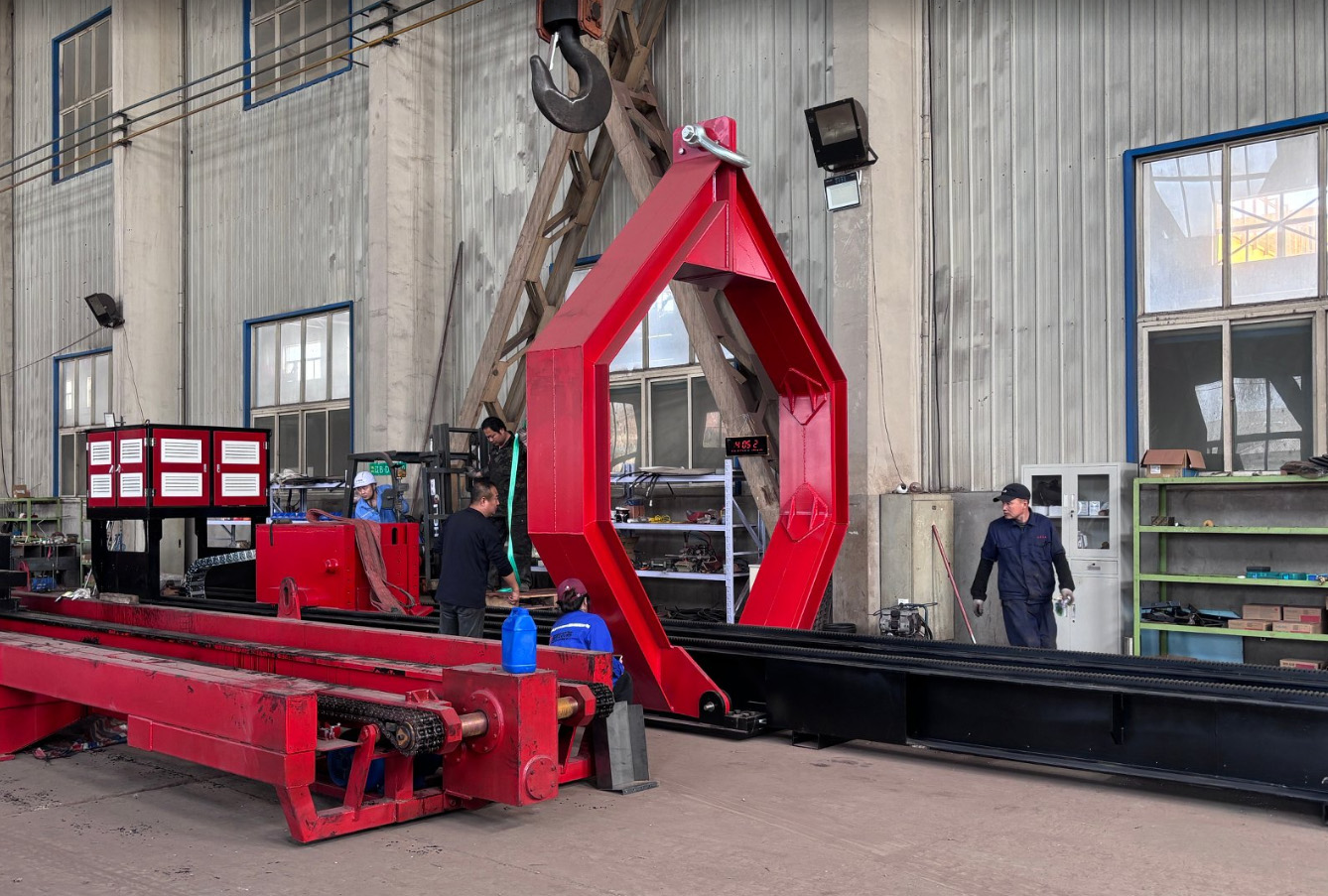
When evaluating a tube bundle extractor, two numbers often appear together: bundle capacity and pulling force.
They are easy to confuse, but they describe two different requirements.
For example, our 45T tube bundle extractor is configured for a 45-ton bundle capacity while providing up to 60 tf (588 kN) of pulling force.
Why does a machine designed for a 45-ton bundle need more than 45 tons of pulling force?
The answer comes from what actually happens when a heat exchanger bundle is removed from its shell.
Bundle Weight Is Only Part of the Load
The weight of the tube bundle is important, but it does not tell us how difficult the bundle will be to extract.
During maintenance, a bundle may have been inside the exchanger for years. Fouling, corrosion, deposits and long-term contact between the bundle and shell can create significant resistance when extraction begins.
This means a 30-ton or 40-ton bundle does not necessarily require only 30 or 40 tons of pulling force.
The extractor needs enough reserve capacity to start and control the movement without relying on the machine's maximum capability during normal operation.
That is why bundle carrying capacity and maximum pulling force should be considered separately.
What Does 45T Bundle Capacity Mean?
The 45T rating refers to the equipment's designed bundle-handling capacity.
It is related to the structural frame, lifting arrangement, support system and overall load-bearing design of the extractor.
During extraction, the tube bundle gradually moves out of the exchanger shell. As more of the bundle leaves the shell, its weight has to be properly supported and kept aligned with the pulling direction.
This is why selecting a bundle extractor only by pulling force can be misleading.
A machine may have strong hydraulic pulling capability, but it must also provide sufficient structural support for the actual bundle being handled.
Why Can Pulling Force Reach 60 tf?
Pulling force is used to overcome the resistance between the tube bundle and the exchanger shell.
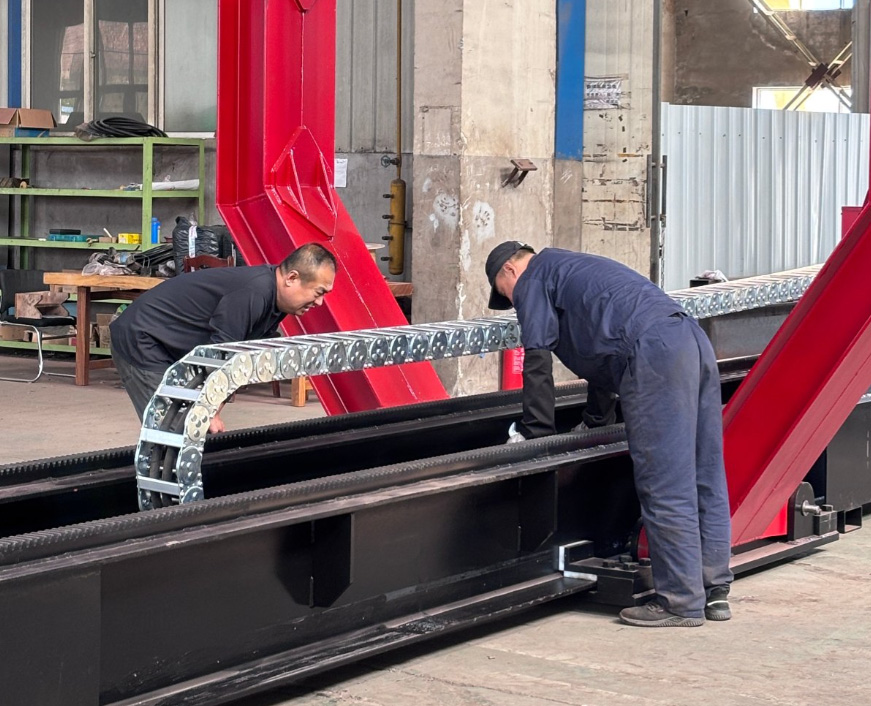
The required force can be affected by several conditions:
- bundle weight;
- bundle length;
- tube sheet and bundle diameter;
- fouling and deposit condition;
- corrosion or long service history;
- alignment between the exchanger and extractor;
- condition of bundle support points;
- initial breakaway resistance.
The highest resistance often occurs when the bundle first begins to move.
Once the bundle has broken free and extraction is stable, the required pulling force may decrease significantly.
For this reason, 60 tf should be understood as available maximum pulling capability - not as the force that should always be applied during extraction.
Good bundle extraction is not about using the highest possible force. It is about applying sufficient force while keeping the bundle stable, aligned and under control.
A Typical 45T Diesel Configuration
For refinery and petrochemical maintenance projects requiring this capacity range, a typical Qingwei configuration can include:
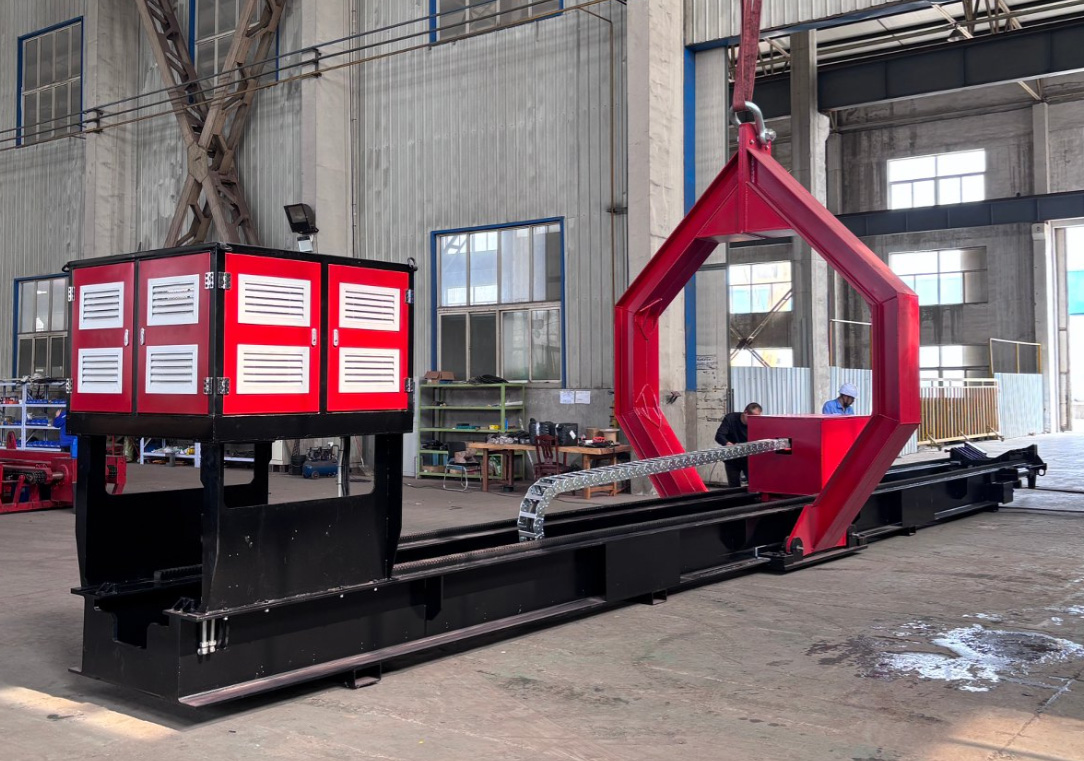
| Specification | Typical Configuration |
|---|---|
| Rated bundle capacity | 45 t |
| Maximum pulling force | 60 tf / 588 kN |
| Hydraulic system pressure | 16 MPa |
| Diesel engine power | 36 kW |
| Tube sheet / bundle diameter range | Ø2000-2500 mm |
| Standard bundle length | 9 m |
| Modular working range | Approx. 8-12 m |
| Control | Wired remote control |
| Optional control | Wireless remote control |
| Application | Refinery, petrochemical and heat exchanger maintenance |
The final configuration should always be checked against the actual exchanger data rather than selected from capacity alone.
Why Alignment Matters as Much as Pulling Force
One of the most important factors during tube bundle extraction is alignment.
If the extractor is not correctly positioned relative to the exchanger centerline, part of the pulling force can become a side load instead of useful extraction force.
This can increase resistance and place unnecessary stress on the bundle, pulling components and support structure.
Before extraction begins, operators should confirm that:
- the extractor is positioned on the correct centerline;
- the machine is level and stable;
- the bundle support arrangement is ready;
- pulling cables and attachment points are correctly installed;
- the bundle can move without interference;
- sufficient space is available for the full extraction length.
In real maintenance work, correct setup often contributes more to a smooth extraction than simply choosing a machine with a larger pulling-force number.
Diesel Power for Turnaround Work
Diesel-powered tube bundle extractors are commonly selected when the maintenance team needs the machine to operate independently of an external electrical supply.
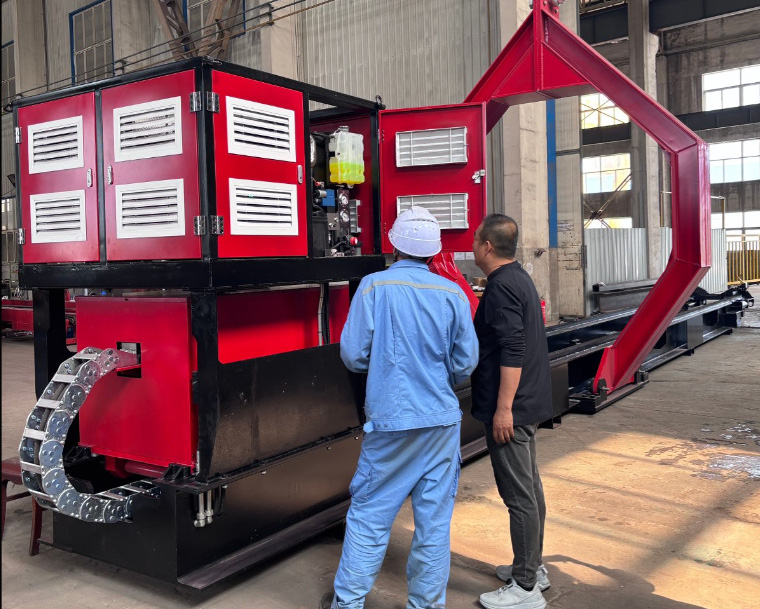
This can be useful when exchangers are distributed across a refinery or petrochemical plant and the extractor needs to move between different working areas during a turnaround.
The hydraulic system provides controlled extraction and insertion, while remote operation allows the operator to maintain a better position for observing bundle movement.
Wireless remote control can also be provided when required by the project, although the final control arrangement should follow the site's operating and HSE requirements.
What We Check Before a 45T Extractor Leaves the Factory
A specification sheet is only the starting point.
Before shipment, the actual machine should be checked as a complete operating system.
For a heavy-duty bundle extractor, our factory inspection normally focuses on areas such as:
Structural assembly
Frame, lifting structure, pulling components, support points and major connections are checked against the approved configuration.
Hydraulic operation
System pressure, cylinders, hoses, valves and operating movements are checked for correct response and leakage.
Pulling operation
The pulling system is operated and tested to verify controlled movement and the required pulling capability.
Remote controls
Operating commands, emergency functions and wired or optional wireless controls are checked before delivery.
Travel and support systems
Movement of the sliding structure and associated bundle-support equipment is reviewed as part of the complete operating sequence.
These checks are particularly important for equipment that may arrive at site shortly before a scheduled shutdown, when there is little time available for troubleshooting.
Information We Need Before Recommending a Model
We normally do not recommend a tube bundle extractor based only on the statement:
"The bundle weighs 40 tons."
For a proper equipment selection, several pieces of information are more useful together:
- Maximum tube bundle weight
- Bundle length
- Maximum tube sheet or bundle diameter
- Exchanger working height
- Available working space around the exchanger
- Expected fouling or difficult extraction conditions
- Preferred diesel or electric power
- Site lifting and transportation restrictions
Site photographs and exchanger drawings are especially useful when space is limited.
With this information, the equipment can be configured around the actual maintenance task rather than simply choosing the next larger machine.
More Pulling Force Is Not Always the Better Answer
It is tempting to compare bundle extractors by looking only at the largest force number on the specification sheet.
In practice, successful tube bundle extraction depends on the complete system:
adequate pulling capacity + structural stability + correct support + alignment + controlled operation.
A well-matched extractor should provide sufficient reserve pulling capability without making the machine unnecessarily large or difficult to handle at site.
For a 45-ton bundle application, the right question is therefore not simply:
"How many tons can the machine pull?"
A better question is:
"Can the machine safely support, align, extract and reinstall this particular tube bundle under our actual site conditions?"
That is the information that should drive equipment selection.
Planning a Tube Bundle Extraction Project?
Send us the bundle weight, length, diameter, exchanger working height and site photos.
Qingwei engineers can review the application and recommend a suitable diesel tube bundle extractor configuration for your maintenance or turnaround project.
Explore our Tube Bundle Extractor range or request a technical review.