
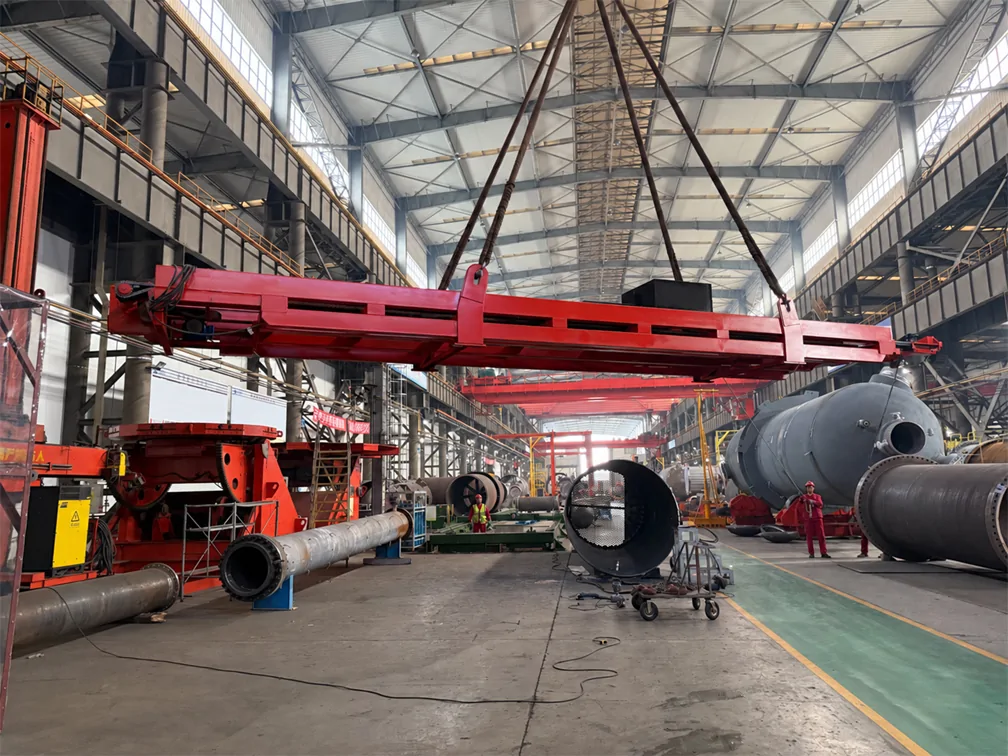
When selecting a tube bundle extractor, a longer machine is not always the better solution.
In many refinery, petrochemical and heat exchanger maintenance projects, extra-long tube bundles account for only a small proportion of the actual workload. At the same time, equipment size has a direct impact on transportation, lifting, site access and maneuverability.
For this reason, Qingwei often recommends a modular front and rear extension solution instead of simply increasing the length of the main machine.
This configuration gives customers greater flexibility while keeping the standard extractor more practical for daily maintenance work.
If you are comparing different configurations, you can also review our tube bundle extractor range.
1. One Machine Can Cover More Tube Bundle Lengths
For many customers, most heat exchanger bundles fall within a normal length range, while only a few units in the plant may require additional working length.
If the entire tube bundle extractor is designed according to the longest bundle, the machine may become unnecessarily long for most projects.
A modular extension provides another option.
The standard extractor can be used for normal maintenance work, while the front or rear extension can be installed when a longer tube bundle needs to be handled.
This allows one machine to cover a wider range of heat exchangers without making the complete machine permanently oversized.
Our commonly supplied configuration includes:
- 1,000 mm front extension
- 2,000 mm rear extension
Special lengths can also be designed according to the actual tube bundle dimensions, weight and operating conditions.
2. Better Adaptability in Restricted Working Areas
Space around heat exchangers is often limited.
In an actual refinery or petrochemical plant, the tube bundle extractor may need to operate between pipelines, steel structures, columns, equipment foundations or other process units.
A machine designed permanently with a very long frame may create unnecessary difficulties when entering or positioning inside these areas.
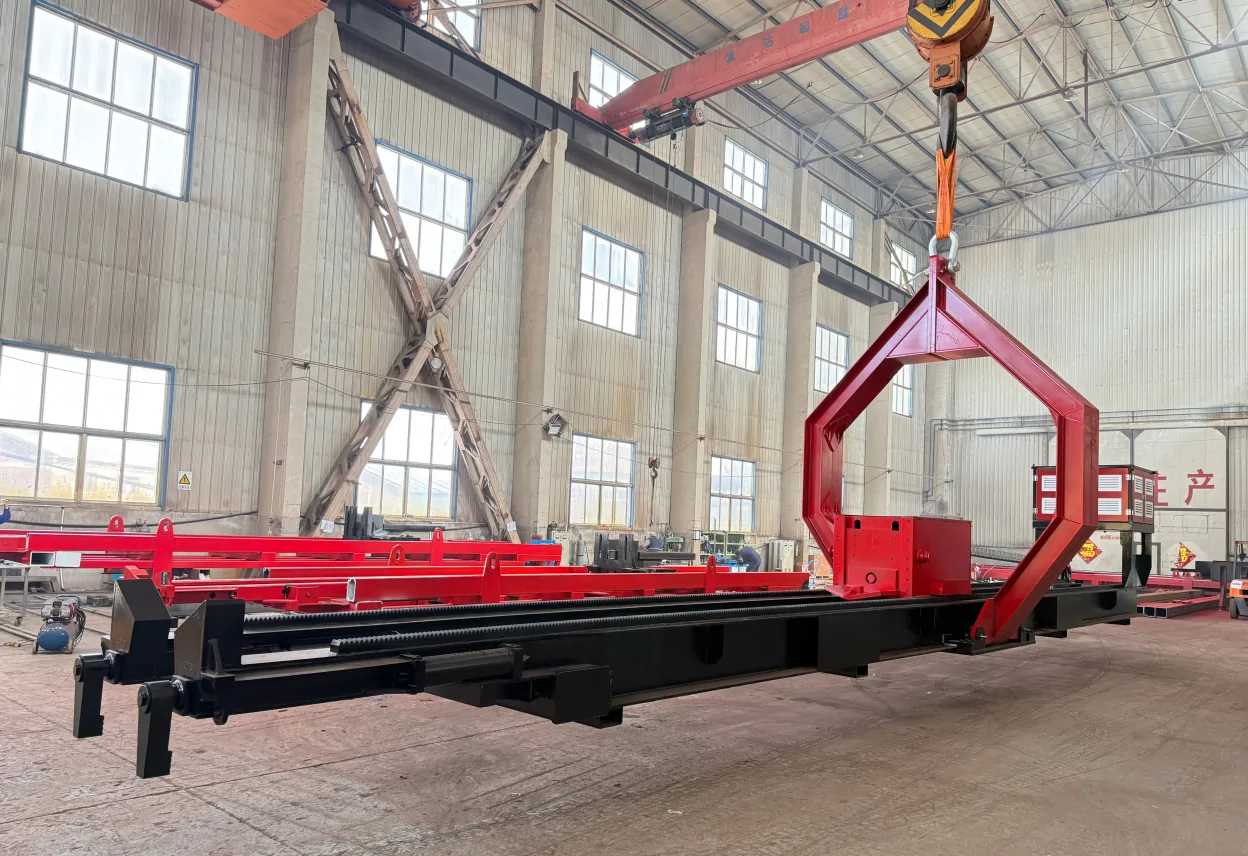
With a modular extension design, customers can keep the main extractor relatively compact during normal operations and install additional sections only when required.
This can improve the equipment's adaptability to different maintenance areas and allows the same extractor to serve more heat exchangers across a plant.
3. Easier International Transportation
Transportation is another important reason why we recommend modular extensions.
As the overall machine length increases, loading into a standard container may become more difficult depending on the final transport dimensions, packing arrangement and shipping method.
Instead of making the complete main frame excessively long, part of the required length can be achieved through detachable front or rear extensions.
The main machine and extension sections can then be arranged separately for transportation.
For international projects, this can help simplify:
- Container loading
- Shipping arrangement
- Port handling
- Inland transportation
- Site unloading
It can also reduce the need for oversized or special transportation in some projects.
The final shipping method is always determined according to the actual machine dimensions and destination.
4. Simple Installation at the Job Site
The extension system is designed as part of the machine from the beginning.
Connection points and positioning structures are prepared on the extractor during manufacturing.
Therefore, installing the extension does not require complicated modification of the machine.
At the job site, the extension section can be aligned with the reserved interface and securely fastened according to the installation procedure.
This modular design is especially useful for contractors who move their equipment between different refineries, petrochemical plants or maintenance projects.
5. More Convenient for Lifting and Site Handling
A very long integrated machine can also create additional challenges during crane lifting.
Even when the total weight does not increase significantly, a longer structure changes the lifting radius, center-of-gravity management and the space required for crane operation.
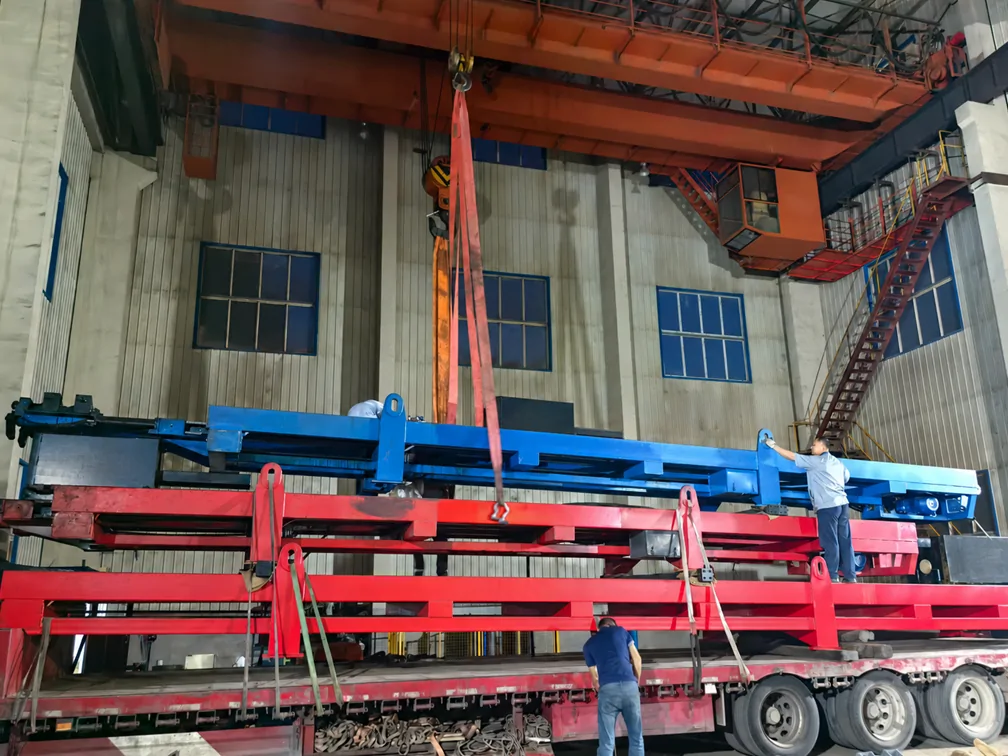
Using detachable extensions allows the extractor and extension components to be handled separately when necessary.
Because the extension module is detachable, it can also be lifted and handled separately from the main extractor when required.
This can make transportation, unloading, crane lifting and site positioning more manageable, especially at plants where available lifting space is limited.
6. Avoid Designing the Entire Machine Around an Occasional Requirement
This is one of the most important advantages of the extension concept.
For example, a contractor may normally work with tube bundles of 7-8 meters, but occasionally encounter a bundle of 10 or 11 meters.
Designing the entire extractor around the occasional 11-meter requirement may mean carrying a larger machine on every project.
Instead, the customer can use the standard configuration for most maintenance jobs and install an extension only when the longer bundle appears.
This provides a better balance between:
working capacity, machine dimensions, transportation and site flexibility.
7. Customized Extensions for Special Projects
The standard 1-meter front extension and 2-meter rear extension cover many common applications, but they are not fixed limits.
For special projects, Qingwei can evaluate the extension length according to:
- Tube bundle length
- Tube bundle weight
- Tube sheet diameter
- Extractor capacity
- Required operating distance
- Site space
- Lifting conditions
- Transportation restrictions
Different extension configurations can then be designed to match the actual maintenance requirement.
For heavier or longer tube bundles, the extension structure must always be evaluated together with the load condition rather than simply increasing its length.
If the project also requires pulling-force evaluation, see our pulling force selection guide.
A More Flexible Way to Configure a Tube Bundle Extractor
The purpose of using front and rear extensions is not simply to make the machine longer.
The real value is flexibility.
A properly selected tube bundle extractor should not only be capable of removing and inserting the required tube bundle. It should also be practical to transport, lift, position and use repeatedly across different maintenance projects.
For customers who work with multiple heat exchanger sizes, modular front and rear extensions can help one extractor adapt to more operating conditions while keeping the main machine as compact as practical.
At Qingwei, we normally evaluate the customer's maximum tube bundle weight, length, diameter, site conditions and transportation requirements together before recommending the final extractor configuration.
For diesel-powered configurations, you can also review our diesel tube bundle extractor range.
This is why, in many projects, our recommendation is not simply:
Choose a longer machine.
Instead, it is:
Choose the right main machine and add extension modules where they actually create value.
If you would like us to review your project requirements, please contact Qingwei and send your bundle weight, length, diameter and site conditions.