
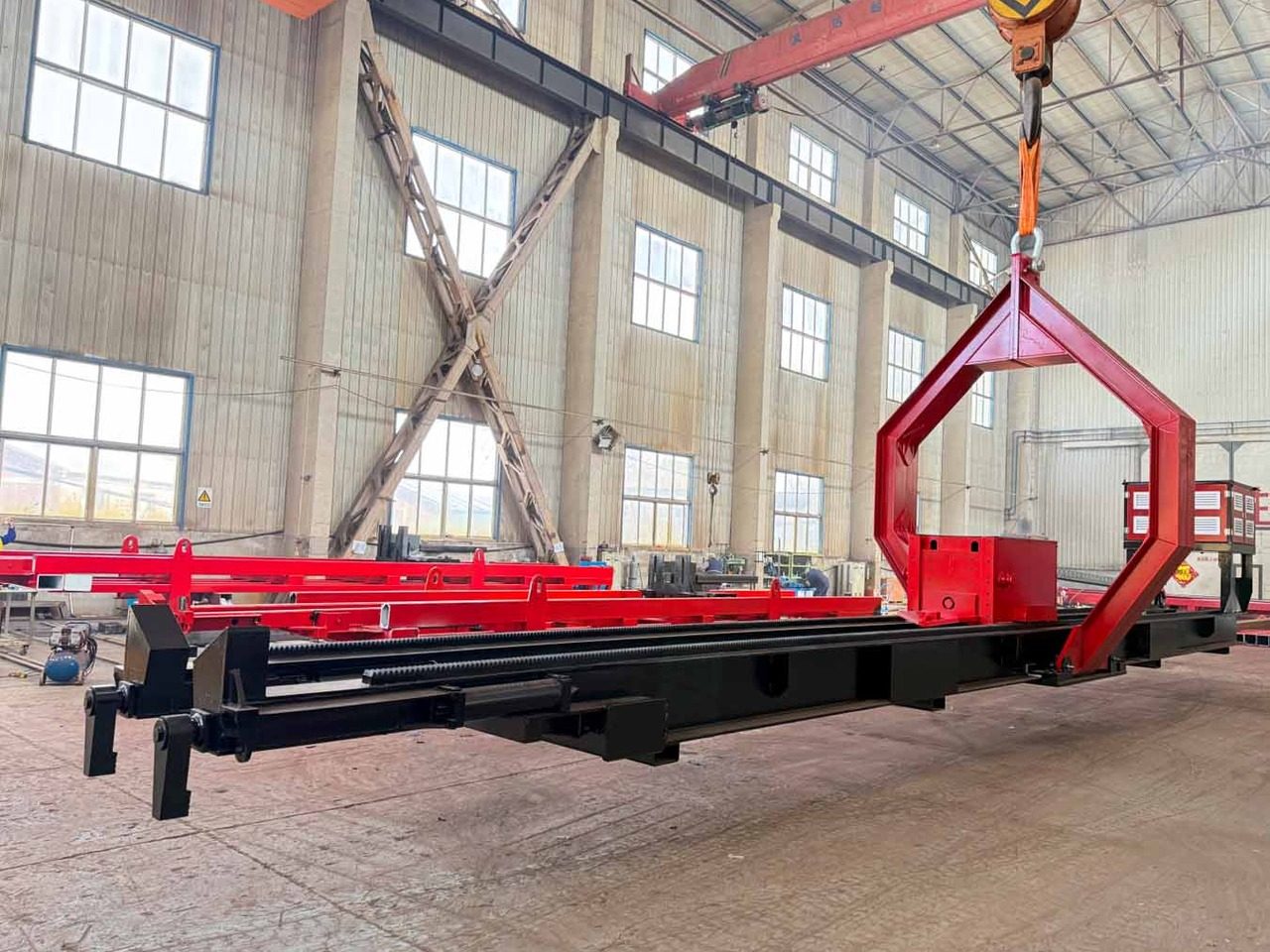
Pulling a tube bundle from a shell and tube heat exchanger looks straightforward from a distance: align the equipment, connect the pulling system and remove the bundle. In a real refinery turnaround or petrochemical maintenance project, the job is rarely that simple. The bundle may be heavier than expected, the exchanger may be positioned in a narrow structure, and the surrounding work area may already be crowded with scaffolding, lifting equipment and other maintenance teams.
Using a tube bundle extractor, also known as a bundle puller, can make tube bundle extraction safer and more controlled. But the equipment alone does not solve every problem. Many delays and safety risks come from planning mistakes made before the machine arrives on site. The following points are common issues that maintenance managers, contractors and turnaround teams should avoid.
1. Starting Without Complete Heat Exchanger Data
One of the most common mistakes is preparing the job with incomplete exchanger information. Teams may know the model of the heat exchanger but not the actual bundle weight, bundle length, tube sheet condition, fouling level or pulling direction. This creates uncertainty when selecting the tube bundle extractor capacity and planning the working area.
Before the job starts, confirm the bundle weight, bundle diameter, bundle length, shell elevation, nozzle orientation and any historical maintenance notes. If the exchanger has not been opened for many years, additional friction or adhesion should be considered. A safe plan should include margin for unexpected resistance, not only the theoretical bundle weight.
2. Choosing Capacity Based Only on Tonnage
Pulling force is important, but tonnage is not the only selection factor. A bundle puller also needs enough stroke, stable support, proper alignment capability and adequate space for safe operation. A machine with high pulling force may still be unsuitable if the working height, support method or access route does not match the exchanger layout.
When comparing equipment, look at the full pulling system. Consider how the bundle will be supported during extraction, how the load is transferred to the frame, how the operator controls movement and whether the machine can remain stable throughout the full pulling distance. For many projects, the best solution is the one that balances capacity, control and site practicality.
3. Ignoring Site Access and Working Space
Tube bundle pulling often fails to stay on schedule because the equipment cannot be positioned as planned. Access roads may be too narrow, pipe racks may limit movement, and other turnaround activities may occupy the same area. If the bundle needs to be fully extracted, the site must have enough straight-line space for the bundle, the extractor and the support area.
During preparation, measure the route from the unloading point to the exchanger. Check floor strength, turning radius, overhead clearance and nearby obstacles. The work area should also include space for operators, inspection personnel and emergency access. These details are especially important in refinery turnaround work, where multiple contractors often work in parallel.
4. Not Supporting the Bundle Correctly During Pulling
A tube bundle is long, heavy and often difficult to balance. If it is not supported correctly, the bundle may sag, rotate or damage the tube sheet. Poor support can also increase friction and make the pulling force less predictable. This is one reason why using general lifting equipment alone is not always the safest method for heat exchanger maintenance.
The pulling plan should define how the bundle will be supported at the start, during movement and after removal. Support points should be stable and aligned with the pulling direction. A well-designed Tube Bundle Extractor helps control this movement, but the site team must still prepare the support layout and exclusion zone before work begins.
5. Overlooking Diesel vs Electric Power Requirements
Power source selection can affect both productivity and site approval. A diesel tube bundle extractor is often practical for outdoor work, remote areas and sites without reliable electrical supply. An electric tube bundle extractor may be preferred for workshops, enclosed areas or projects with stricter emission requirements.
The decision should be made before mobilization. Confirm whether the work area has power availability, ventilation limitations, hazardous area requirements and operating restrictions. Choosing the wrong power configuration can delay the job even when the pulling capacity is correct.
6. Treating Safety as a Final Checklist
Safety planning should not be left until the day of pulling. Tube bundle extraction involves stored energy, heavy loads, pinch points and changing balance conditions. A proper plan should define communication signals, operator positions, exclusion zones, emergency stops and inspection hold points.
Before pulling begins, confirm that the heat exchanger is isolated, depressurized, drained and ready for mechanical work. Check the connection points, support surfaces and alignment. Stop the operation if resistance changes suddenly or if the bundle begins to move out of line. Controlled movement is more important than speed.
7. Not Coordinating Cleaning, Inspection and Reinstallation
Removing the bundle is only one part of heat exchanger maintenance. The turnaround team must also plan cleaning, inspection, repair and reinstallation. If the bundle is removed faster than the downstream activities are ready, the project still loses time. If the bundle cannot be stored safely, damage risk increases.
Good planning connects tube bundle pulling with the full maintenance workflow. Define where the bundle will be placed, how it will be cleaned, who will inspect it and when the equipment will be available for reinstallation. This helps reduce waiting time and makes the turnaround schedule more predictable.
How Qingwei Equipment Supports Safer Tube Bundle Pulling
Qingwei Equipment provides tube bundle extractor and bundle puller solutions for refinery, petrochemical and industrial heat exchanger maintenance. Our team can review exchanger data, site access information and project requirements to recommend a suitable pulling solution.
If you are preparing a maintenance project, you can review our tube bundle extraction solutions or contact Qingwei Equipment with exchanger dimensions, bundle weight, working height and site photos. These details help us support faster model selection and a more practical quotation.
Final Thoughts
Most tube bundle pulling problems can be reduced with better preparation. Accurate exchanger data, realistic site access planning, correct equipment selection and disciplined safety control all help the job run more smoothly. In refinery turnaround and petrochemical maintenance, planning is not paperwork; it is the foundation for safe and efficient execution.