
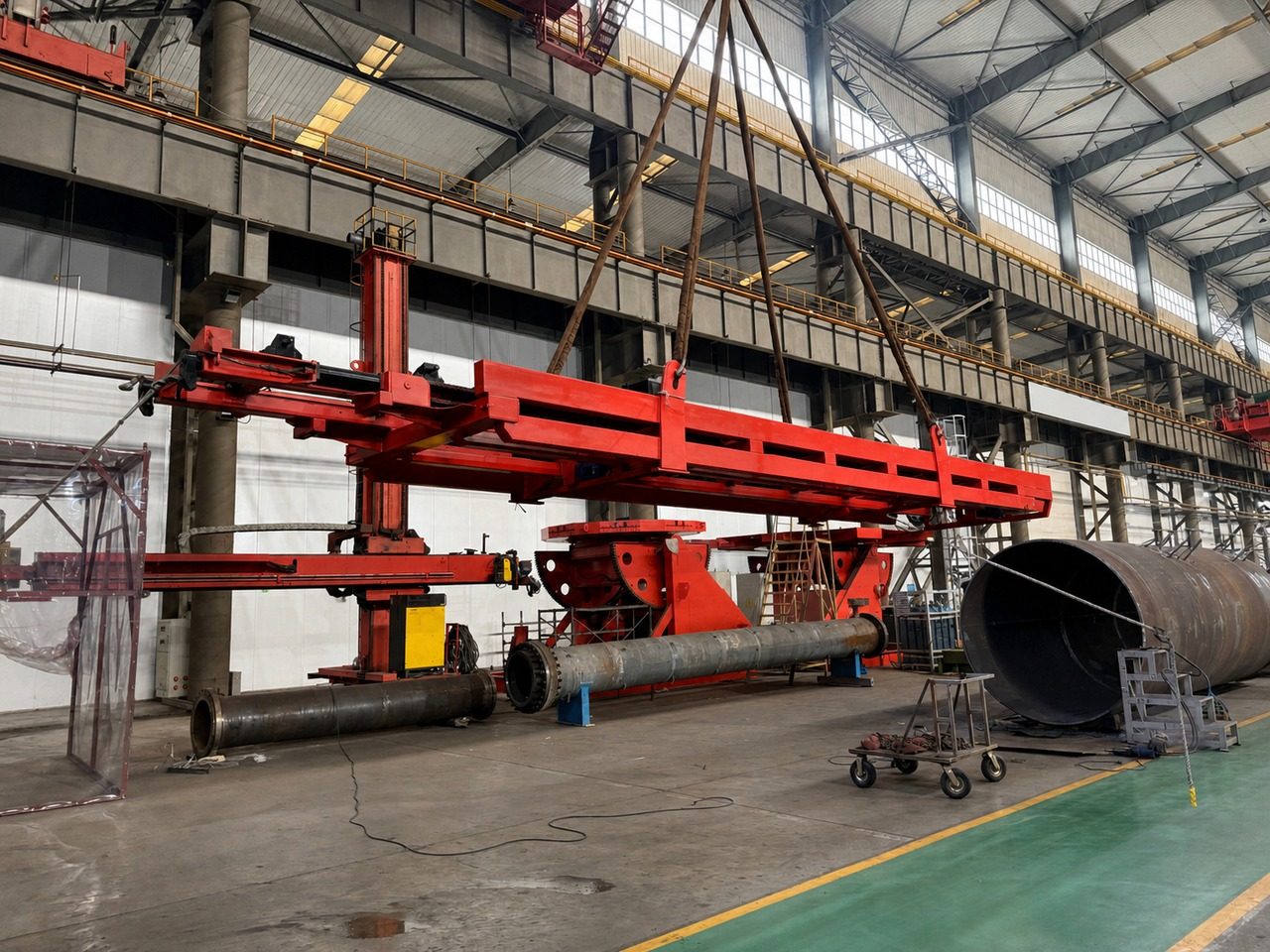
Safe tube bundle pulling begins long before the bundle puller arrives at the refinery or petrochemical plant. A shell and tube heat exchanger may look ready once the covers are removed, but the actual extraction job depends on many details: bundle weight, tube sheet condition, fouling level, pulling direction, access route, support method and the available working space around the exchanger.
For turnaround teams, maintenance contractors and EPC planners, preparation is what turns tube bundle extraction from a difficult site activity into a controlled maintenance operation. The right tube bundle extractor can provide strong pulling force and stable support, but it must be matched with accurate exchanger data and a realistic site plan.
1. Confirm Exchanger Data Before Opening the Job
The first step is to collect reliable heat exchanger information. At minimum, the maintenance team should confirm the bundle weight, bundle length, bundle diameter, shell size, tube sheet thickness, pulling direction and operating history. Drawings are useful, but older equipment may have been modified or repaired over time, so field verification is still important.
If the exchanger has heavy fouling, corrosion, product deposits or a long operating interval since the last cleaning, the pulling resistance can be higher than expected. This does not always mean a larger machine is required, but it does mean the equipment selection should include a safety margin and a stable pulling arrangement. Good data helps the supplier recommend a suitable bundle puller instead of guessing from nameplate information alone.
2. Inspect the Bundle Face and Tube Sheet Condition
Before pulling starts, inspect the exposed tube sheet, bundle face, gasket surfaces and shell opening. Look for signs of deformation, seized areas, corrosion, damaged tubes or deposits that could increase extraction resistance. If a bundle is partly stuck, forcing it without understanding the cause may damage the exchanger or create an unsafe load condition.
Cleaning around the front face and removing loose debris can make the initial movement smoother. The team should also confirm whether any internal parts, baffles or sealing strips may interfere with the pulling direction. These checks are especially useful in petrochemical maintenance projects where exchangers may handle fouling services or high-temperature process fluids.
3. Prepare the Site Access Route
A tube bundle extractor cannot perform well if it cannot reach the exchanger safely. Before mobilization, check road width, turning radius, floor load capacity, overhead clearance, pipe rack restrictions and the unloading point. The route should be suitable for the equipment, operators and any supporting tools needed during the job.
The working area must also be long enough to accommodate the extracted bundle. In many refinery turnaround jobs, the straight-line space in front of the exchanger is the limiting factor. Scaffolding, temporary piping, cranes, vehicles and other maintenance activities should be planned around the pulling zone, not discovered on the day of work.
4. Choose the Right Bundle Puller Configuration
Pulling capacity is important, but it is not the only selection factor. A practical bundle puller configuration also depends on working height, bundle support length, stroke, alignment method, control system and available power source. A machine that looks strong on paper may still be difficult to use if the site has narrow access or limited operator space.
For outdoor refinery units, a diesel tube bundle extractor may be preferred when power supply is limited or the equipment needs to move across a large area. For workshops, controlled maintenance zones or sites with strict emission requirements, an electric tube bundle extractor can be a cleaner and quieter option. The best choice depends on the actual site conditions, not only the exchanger size.
5. Check Lifting and Support Interfaces
Even when the extractor performs the pulling work, the bundle still needs proper support during handling, inspection and cleaning. Confirm how the bundle will be supported after extraction and whether additional rollers, stands, saddles or transport equipment are required. Poor support can bend tubes, damage baffles or create unstable loads.
Operators should also check whether lifting lugs, lifting beams or temporary fixtures are needed. If cranes or forklifts are involved, their roles should be clearly separated from the pulling operation. A tube bundle extractor is designed to pull and support the bundle in a controlled direction; lifting plans should still follow site procedures and approved rigging practices.
6. Review Safety Controls Before Pulling
Before the first movement, hold a short pre-job safety review with operations, maintenance, lifting, scaffolding and safety personnel. Confirm isolation status, gas testing requirements, hot work restrictions, exclusion zones, communication signals and emergency access. The pulling line should be kept clear, and only trained personnel should remain near the equipment during operation.
Many incidents happen during the first few minutes of movement, when resistance is unknown and the team is still adjusting alignment. Start slowly, monitor the load, and stop if movement is uneven or abnormal noise appears. Controlled extraction is always better than trying to recover from a rushed pull.
7. How Qingwei Equipment Supports Preparation
Qingwei Equipment supports refinery and petrochemical maintenance teams with tube bundle extractor and bundle puller solutions for different exchanger sizes, access conditions and turnaround schedules. Our engineers can review bundle weight, length, diameter, working height, site photos and available power to recommend a practical equipment configuration.
If your team is planning a shutdown maintenance project, you can review our tube bundle extraction solutions or send exchanger data through the contact page. For more maintenance planning topics, visit the Qingwei technical blog.
Final Thoughts
Preparing a heat exchanger for safe tube bundle pulling is not only a mechanical task. It is a planning process that connects exchanger data, site access, equipment selection, lifting support and safety control. When these details are confirmed early, turnaround teams can reduce delays, improve safety and make heat exchanger maintenance more predictable.